— the 50th Anniversary of the 1975 Māori Land March —
the 2025 national commemorations and conversations about the 1975 Matakite Māori Land March
an online hīkoi from Te Hapua in the Far North to Parliament Grounds in Wellington
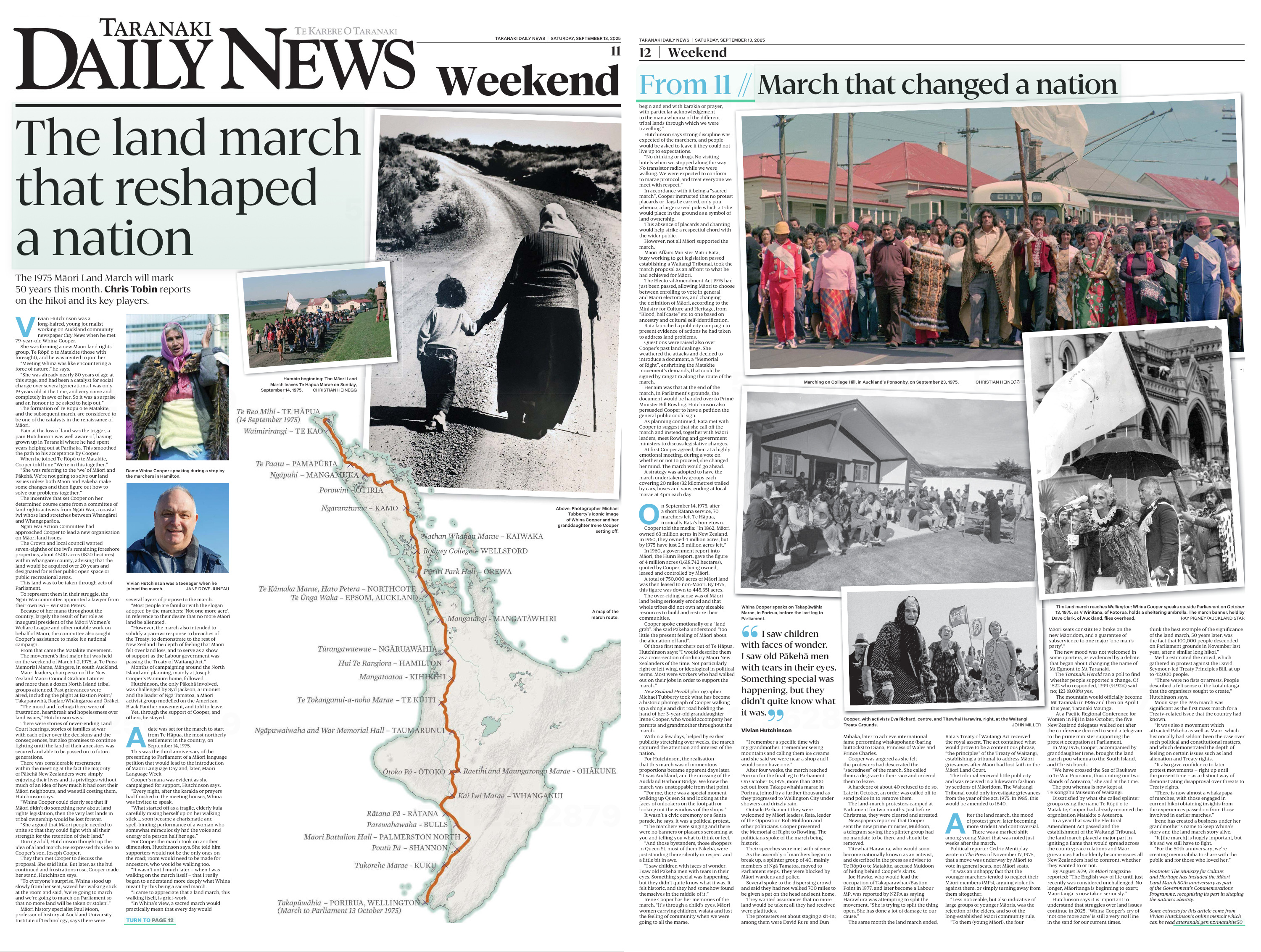
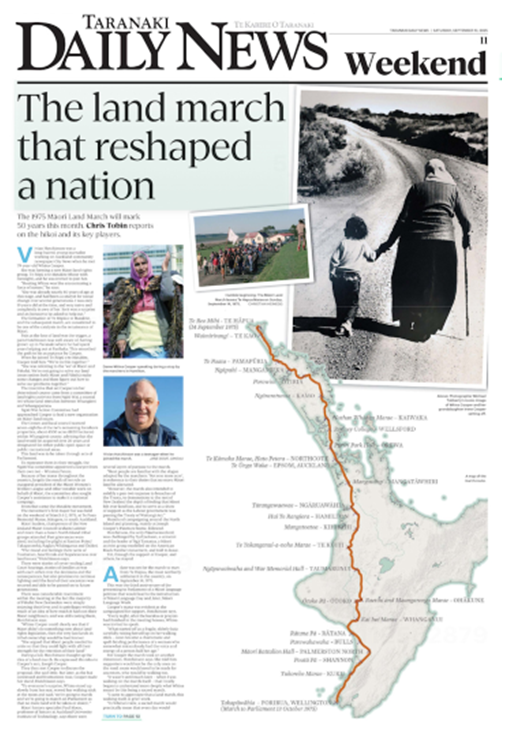
The Land March That Reshaped a Nation
by Chris Tobin, Saturday feature 13th September 2025, STUFF network of newspapers
Professor of history at Auckland University Institute of Technology, Paul Moon: “The 1975 march was significant since it was the first mass march for a Treaty-related issue that the country had known. It was also a movement which attracted Pākehā as well as Māori which historically had seldom been the case over such political and constitutional matters, and which demonstrated the depth of feeling on certain issues such as land alienation and Treaty rights. It also gave confidence to later protest movements – right up until the present time – as a distinct way of demonstrating disapproval over threats to Treaty rights.”
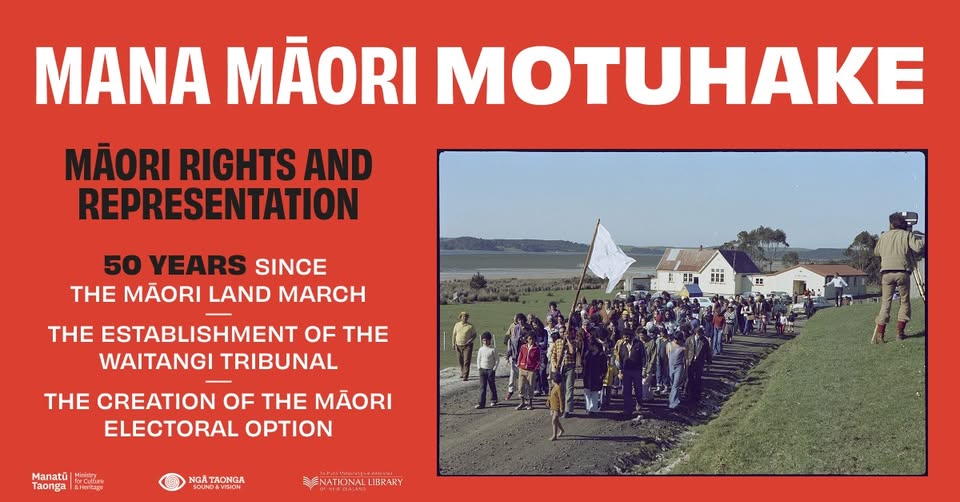
Commemorations and anniversaries - Ngā whakanui me ngā huringa tau
Ministry for Culture and Heritage
2023-2027 Commemorations calendar
Mana Māori Motuhake ׀ Māori rights and representation
50th of Māori Land March (2025)
50th of establishment of Waitangi Tribunal (2025)
50th of Māori electoral option (2025)
Day 0 — Saturday 13th September 1975
Te Reo Mihi Marae, Te Hāpua, Far North
- - - - - - - - - - - - - - - - - - - - -
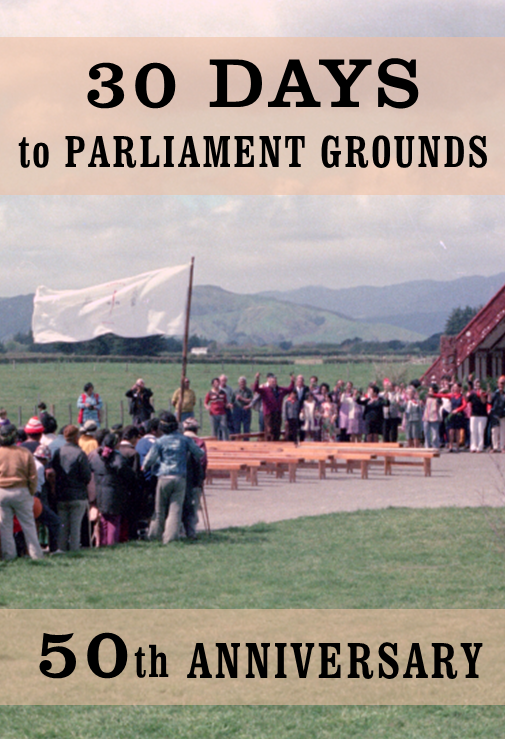
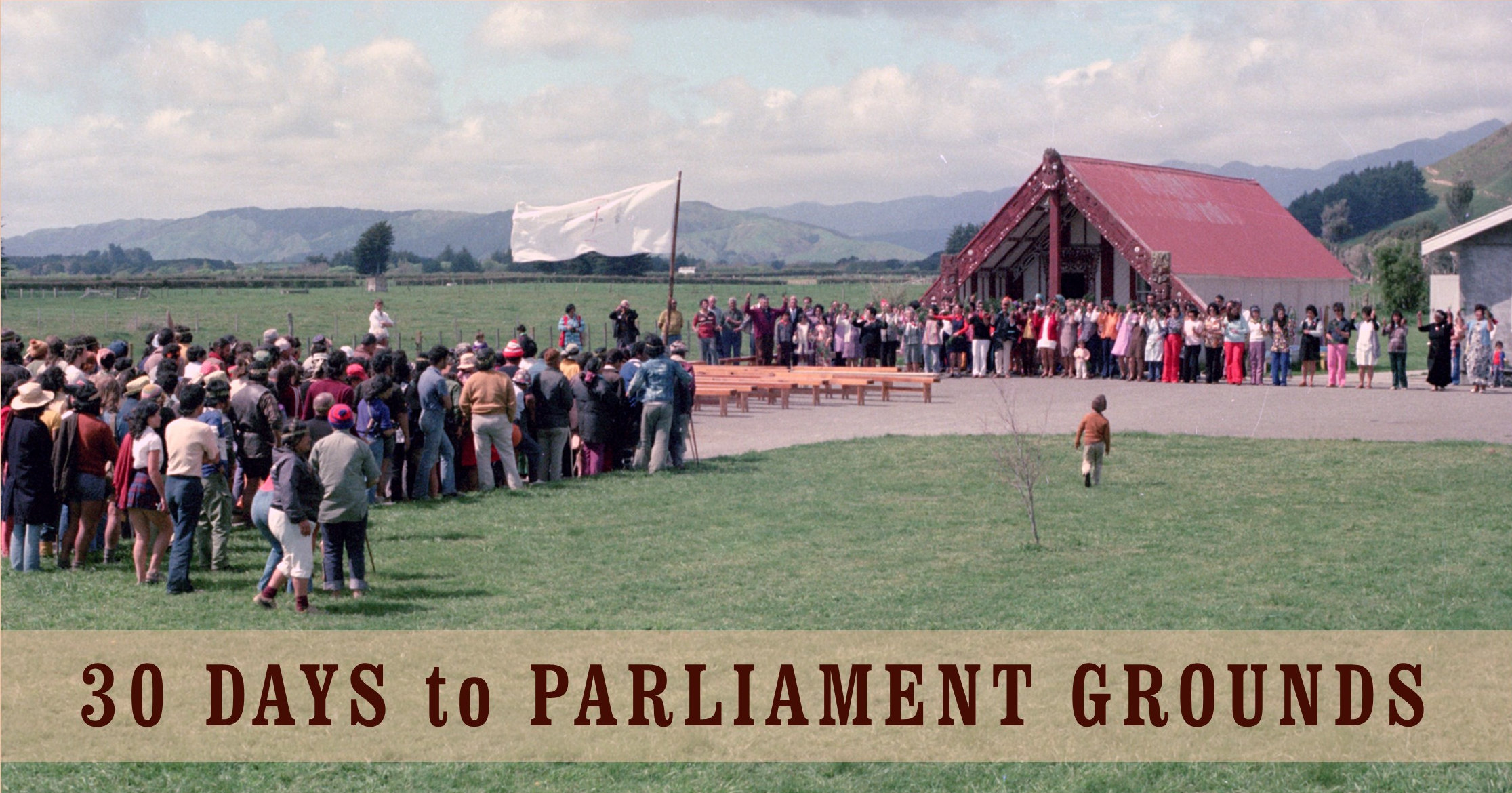
Over the next 30 days, you will be able to time-travel with the 1975 Māori Land Marchers, following an online hīkoi from Te Hapua in the Far North to Parliament Grounds in Wellington.

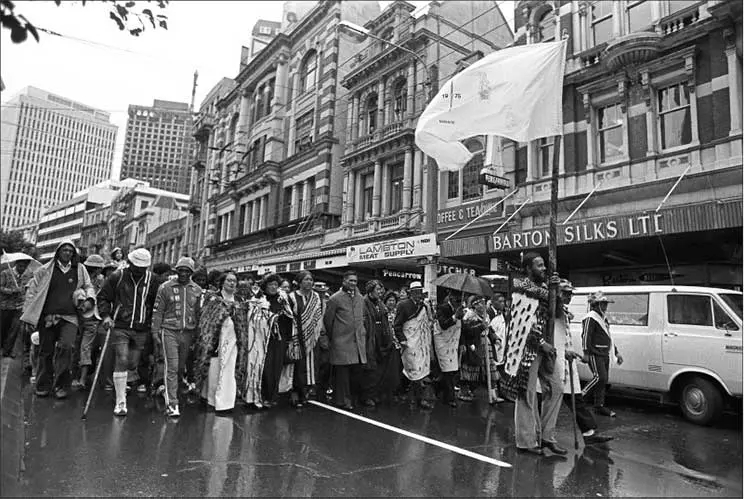
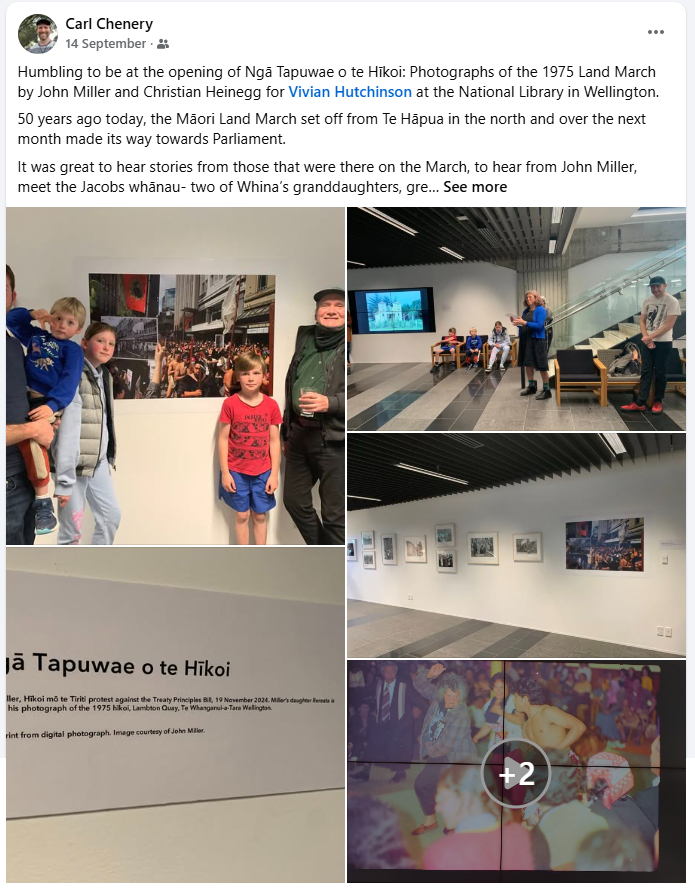
Ngā Tapuwae o te Hīkoi: Photographs by John Miller and Christian Heinegg of the 1975 Māori Land March
Come to the Library to view a display of photographs by John Miller and Christian Heinegg, who recorded the 1975 Māori Land March, a landmark in the political history of Aotearoa New Zealand.
Day 1 — Sunday 14th September 1975
The start of the Māori Land March.
Walk to Waimirirangi, Potahi Marae, Te Kao
- - - - - - - - - - - - - - - - - - - - -
Ngā Taonga Sound and Vision
News Archive TZP4244
Tonight at Nine
The first day of the Māori Land March
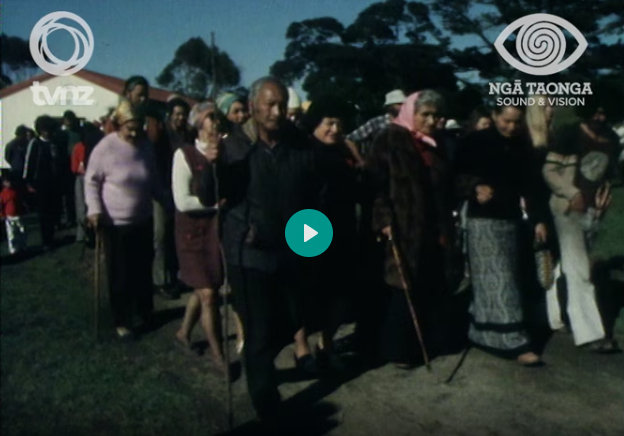
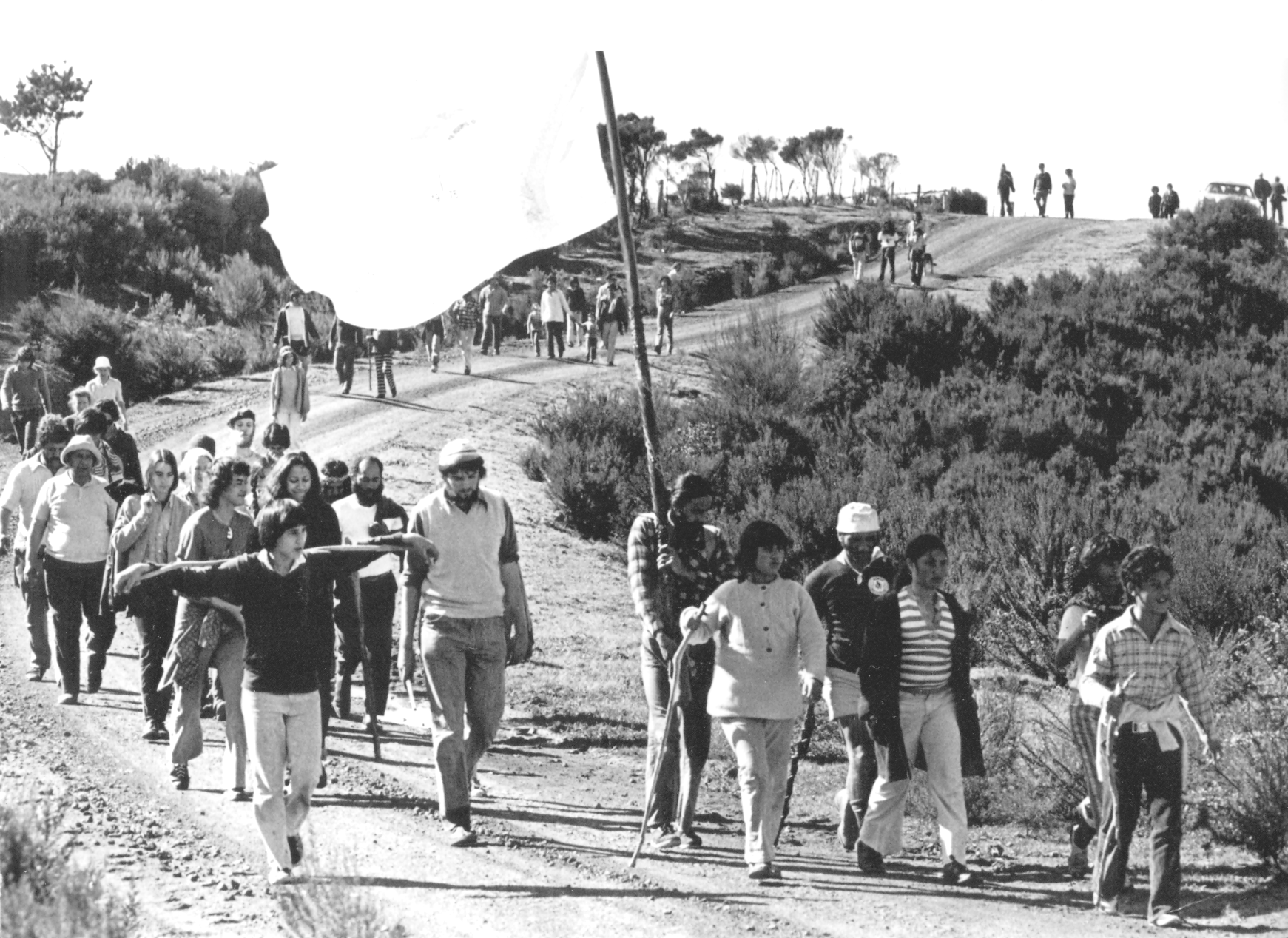
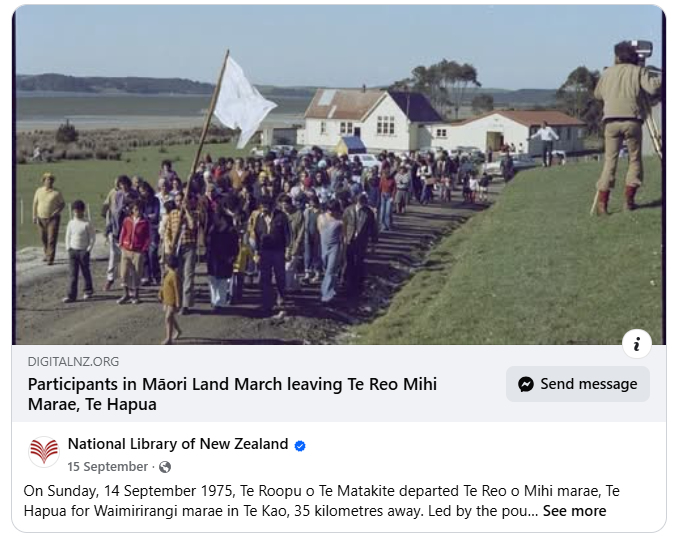
As it turned out, there were only about 40 marchers there at Te Hapua on that first bright Spring morning. Despite traveling around the North Island and campaigning for the six months before the march started, it had been practically impossible to gauge the level of real support beforehand.
Those 40 marchers leaving the Te Hapua marae seemed a very modest contribution to any movement or national debate. We had no idea how it would go. We were creating something that hadn't been done before.
- - - - - - - - - - - - - - - - - - - - -
As I set out in the main group of marchers, I thought of my mentor, Aunty Marj Raumati Rau of Taranaki, and our friendship which had led me to being on this dusty gravel road in the Far North.
Earlier in that year, Whina Cooper had encouraged Taranaki participation in the march by sending a photo of herself to Parihaka, one showing Whina wearing the white feathers of Te Raukura. Aunty Marj responded by flying to Auckland to attend one of the early Land March organising meetings.
When Aunty Marj spoke to the meeting, she held up the photograph, and pointed to the white feathers on her own head, and then to the ones worn by Whina.
She said, “Whina, if you are going to lead a march to Parliament Grounds under the Raukura, then I am going to walk with you. And I will also be there at Parliament to welcome you.” (Aunty Marj in this instance was speaking in her capacity as Te Atiawa mana whenua of Wellington, which included Parliament Grounds.)
Aunty Marj then turned to the people gathered at the meeting, and said, “When you say you are marching 'on' Parliament, I wish you would say you are marching 'to' Parliament. Because Parliament is your place. It is your marae. Don’t ever believe that it doesn’t belong to you. You will be marching to your own place.”
- - - - - - - - - - - - - - - - - - - - -
When I was interviewed for the Stuff feature published yesterday, I was asked: What is the significance of the Land March? In some ways, the Stuff article answered its own question when it spoke of a genealogy of similar non-violent protests that have happened in the last 50 years.
For me, the best tribute to the significance of the Land March had come from the 100 thousand people who had walked to Parliament Grounds in November last year, after their own long hīkoi.
I loved that while the 2024 Hīkoi mō te Tiriti was Māori-led, it had attracted so many other New Zealanders who joined because of what our nation's founding document means to them. And people described a felt sense of the kotahitanga that the organisers sought to create.
Fifty years on ... this non-violent, peaceful, often fierce, yet often joyful, way of speaking to power ... has become a deeply shared part of our nation's inheritance.
- - - - - - - - - - - - - - - - - - - - -
When the 2024 Hīkoi mō te Tiriti arrived on Parliament Grounds, the speaker of the House, Gerry Brownlee, had only one job to do. He could have followed the example set by his predecessor, Jonathan Hunt, 50 years beforehand. He simply needed to walk out onto the forecourt of Parliament, and say "Welcome". Welcome on behalf of all Parliamentarians.
The fact that he felt unable to do that, speaks sadly about our current political moment.
It might have been the biggest gathering ever held on Parliament Grounds. But there were no fists or arrests. People had brought their babies and grandchildren and elders to be there in that moment. And when the 100,000 people left, there wasn't any rubbish left behind. Everything had been picked up and recycled.
That's a people who had marched to their own place.
- - - - - - - - - - - - - - - - - - - - -
photo: Day One. The Māori Land March in the Far North with vivian Hutchinson, Cyril Chapman (carrying the pou whenua), and Moka Puru. Photograph the Auckland Star
50th anniversary of the Māori Land March – Q&A with Irenee Cooper
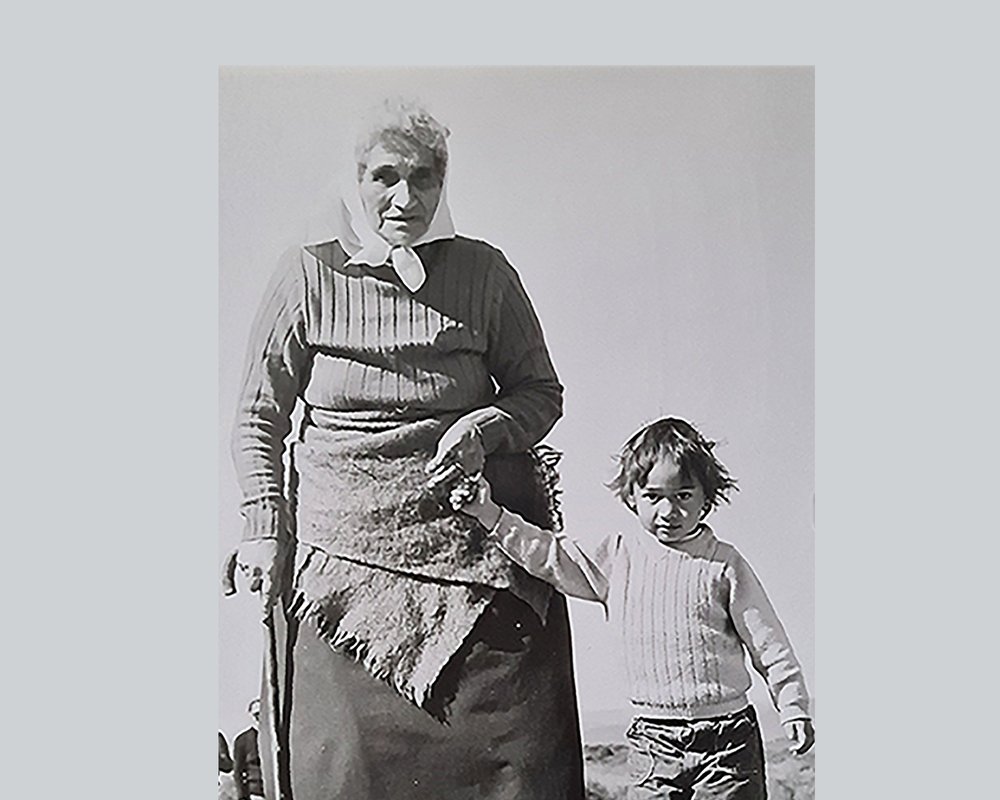
Irenee Cooper, fifty years later: “It gave us a map for how to live, to stand when it’s hard, to walk when you’re tired, to carry your whakapapa forward. Our whānau still talk about the hīkoi not as history, but as a responsibility. It shaped us, reminding us that our voices matter, and that silence is not an option when the whenua is at stake.”
Day 2 — Monday 15th September 1975
to Te Paatu Marae, Pamapūria, Kaitaia
- - - - - - - - - - - - - - - - - - - - -
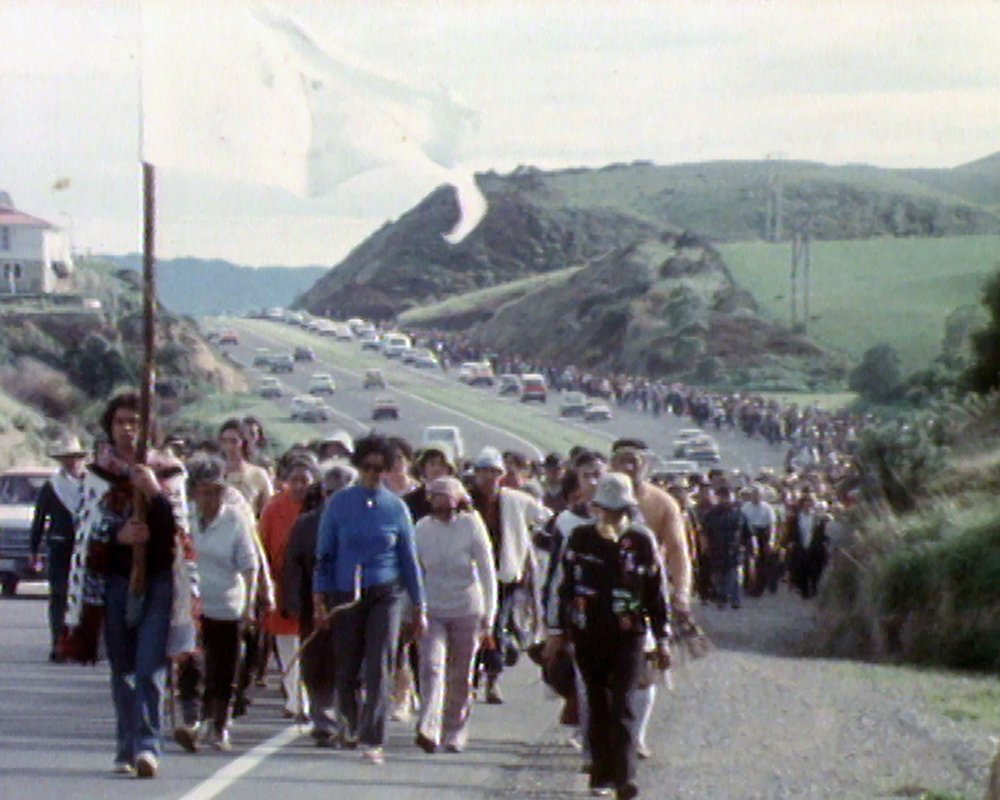
Te Ihi, Te Mana, Te Tapu, Maranga Rā! – 50 Years of the Māori Land March.
Ngā Taonga Sound and Vision have published an audiovisual collection to coincide with the 50th anniversary.
This is about as close as you can get if you want to revisit 1975 and meet with Whina Cooper and Te Roopu o te Matakite organisers, walk with the Māori Land Marchers from Te Hapua in the Far North to Parliament Grounds in Wellington, and then listen to the reception and the speeches on the steps of Parliament.
Day 3 — Tuesday 16th September 1975
to Ngā Puhi, Mangamuka Marae, Mangamuka
- - - - - - - - - - - - - - - - - - - - -
Exodus: Through the Doors of Time
exhibition at Studio One Toi Tū, Ponsonby, Auckland
Exodus is a multi-generational and international exhibition commemorating the 50th anniversary of Te Hīkoi, with Dame Whina Cooper's mokopuna, Janelle Murphy, curating to honour her legacy through indigenous art.
- - - - - - - - - - - - - - - - - - - - - - - -
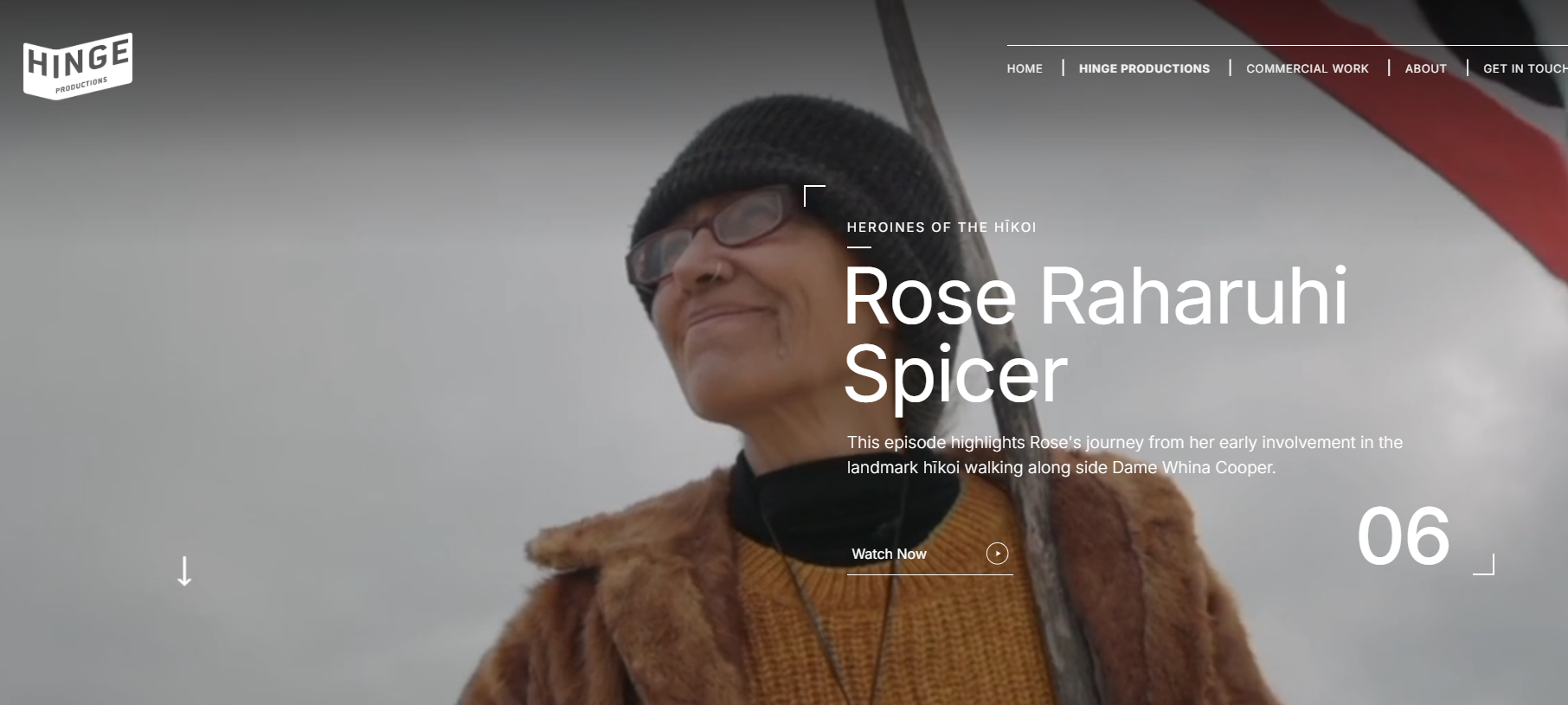
Heroines of the Hikoi is a Newsroom video series produced by Hinge Productions in 2021 profiling seven women who walked with the 1975 Māori land march (hīkoi). The videos were directed by Māori filmmakers Aroha Treacher and Moana Makapelu Lee. The series features Sharon Hawke, Orewa Bartlett-Ohia, Deirdre Nehua, Hinerangi Cooper-Puru, Miriama Rauhihi, and Rose Raharuhi Spicer.
Day 4 — Wednesday 17th September 1975
to Porowini, Ōtiria Marae, Moerewa
- - - - - - - - - - - - - - - - - - - - -
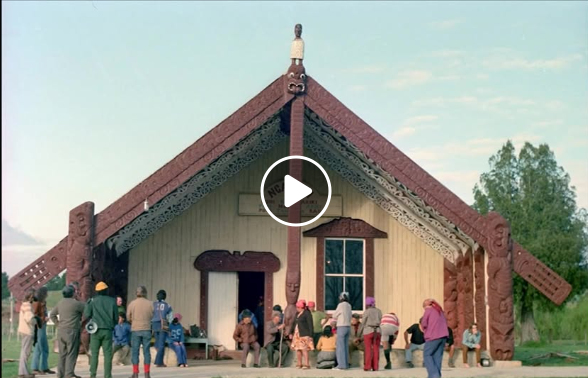
The Treaty of Waitangi wasn't really uppermost in our minds as the schedule of the Māori Land March was being finalised. Fifty years ago, the Treaty was still caught in the long forgetting of our majority culture, and it hadn't yet become a focus for a national conversation. The Matakite organisers never even considered changing the route of the Land March to take in the Treaty Grounds at Waitangi. We were much more interested in getting to the Freezing Works at Moerewa.
- - - - - - - - - - - - - - - - - - - - -
Matakite Chairman Dave Clarke was also a representative of the NZ Seamen's Union, and is interviewed here in a clip from the 2015 documentary, Hikoi. Marchers often reported that they had been forbidden to leave their jobs during the protest, or they would lose their employment. Many left and joined the March anyway. Others found a way of joining for the day that the March came through their town or city.
At Moerewa almost all of the workers in the Freezing Works put down their tools and came to the side of the road to support the marchers. Dave Clarke: "It was then that we realised we were onto it."

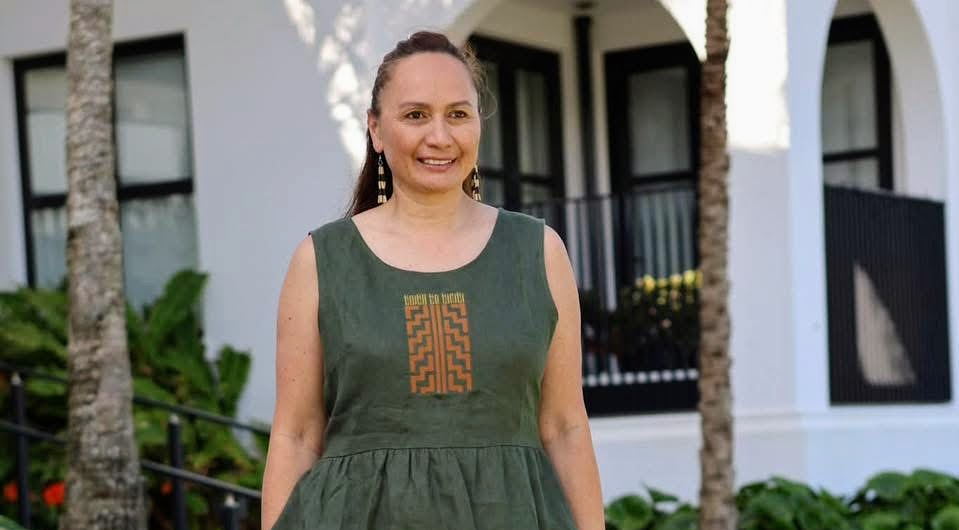
Whina Cooper: Wear the Story
“At Whina Cooper, we are more than a brand—we are kaitiaki of a story that shaped Aotearoa. Our kaupapa is simple yet profound: to honour her enduring vision of unity, resilience, and justice for Māori while inspiring the next generation to carry her legacy forward.”
Day 5 — Thursday 18th September 1975
to Ngāraratunua Marae, Kamo, Whangarei
- - - - - - - - - - - - - - - - - - - - -
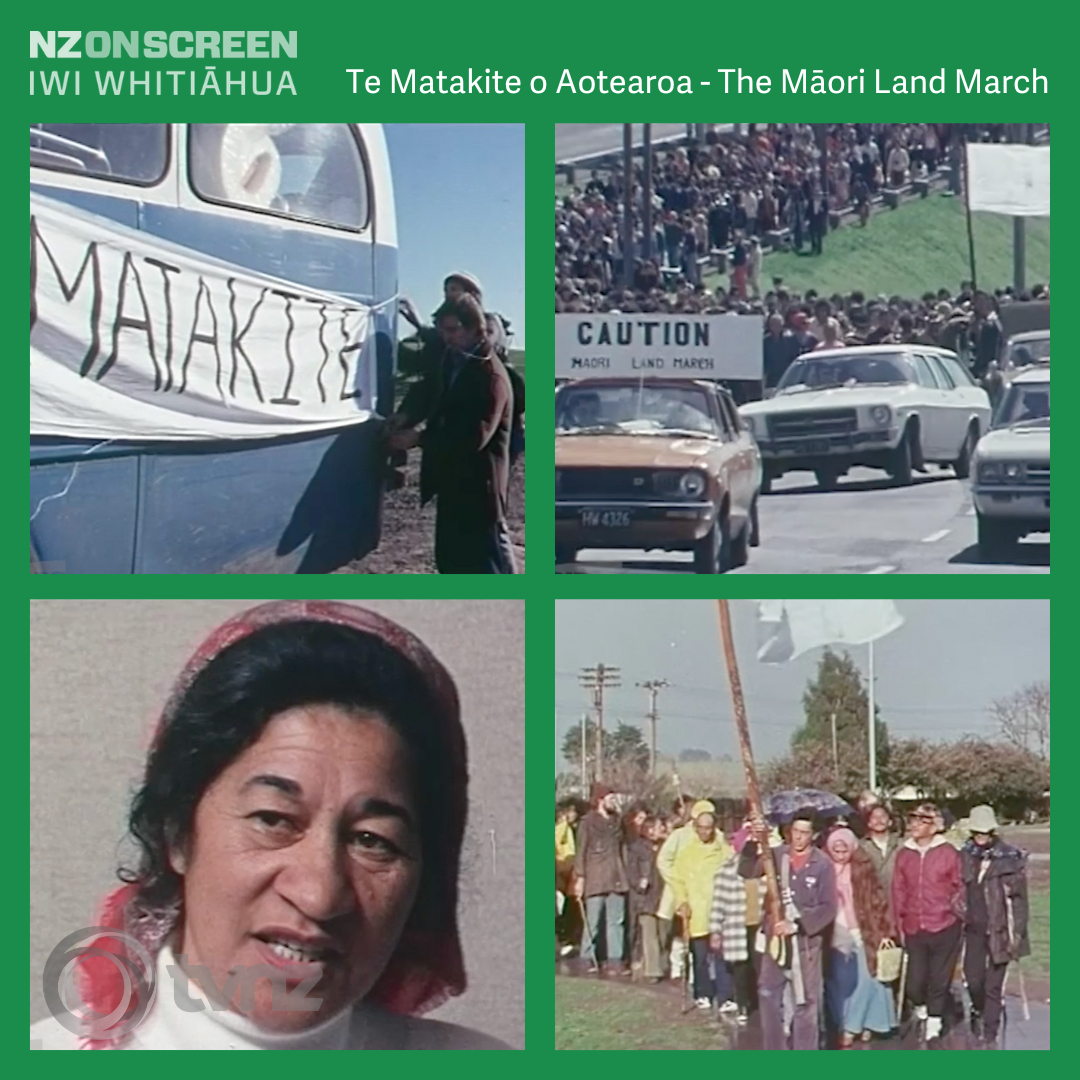
Te Matakite o Aotearoa - The Maori Land March (1975)
Directed by Geoff Steven
full documentary available online at NZ On Screen
Day 6 — Friday 19th September 1975
to Nathan Whanau Marae, Kaiwaka
- - - - - - - - - - - - - - - - - - - - -
Tama Te Kapua Poata memoir - Marching Into History
e-tangata 17 November 2019
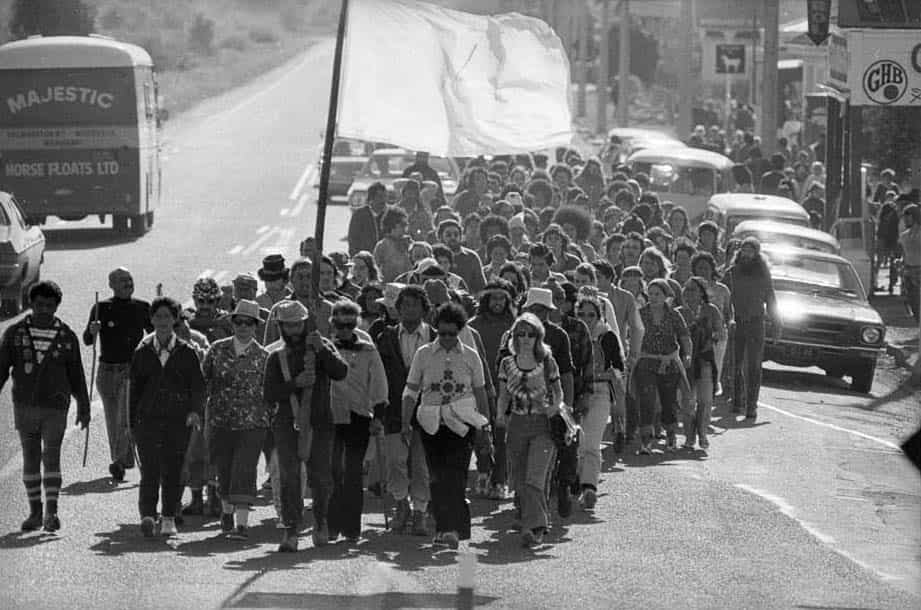
Tama Poata: “When we left and started walking from Te Hāpua, the organisation of the march wasn’t anything to write home about. They did have one bus, belonging to the People’s Union in Auckland, and it looked as if it wouldn’t last as long as our truck did. Strangely enough, even though it did have a couple of minor repairs on the way down, it lasted all the way to Wellington. You could say that it grunted to Wellington, and it got there in better shape than some of the marchers.”
Whenua interactive: The history of how New Zealand land moved out of Māori ownership – use our map to search your area
NZ Herald 25th July 2024 (NZH paywalled)
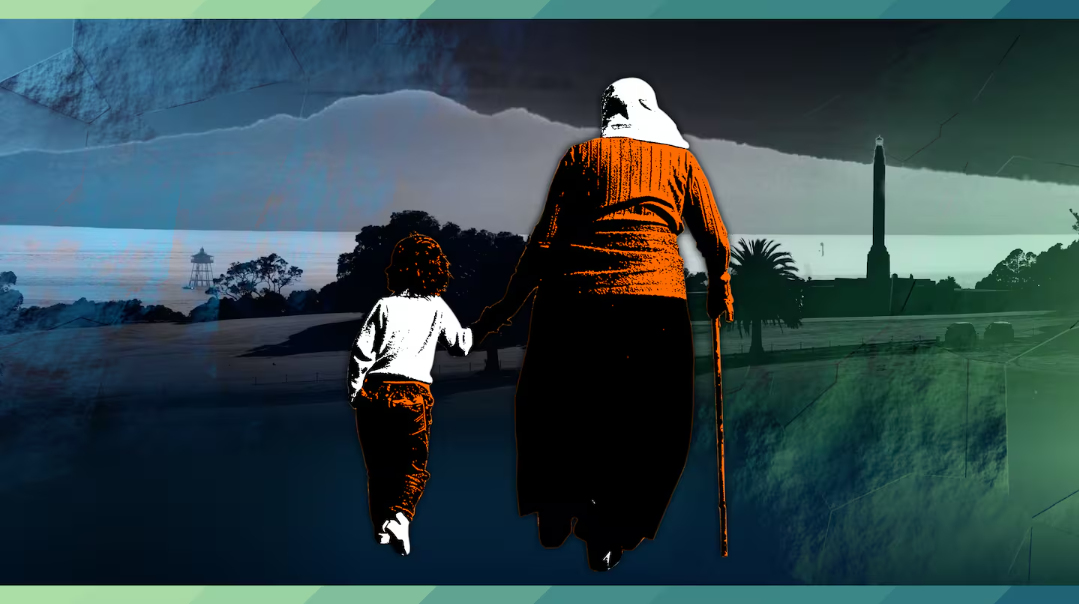
The Whenua project is an interactive map which shows how how Māori land passed into Pākehā ownership and the stories surrounding it. The map, compiled by data journalist Chris Knox, includes historic claims to each area, official land loss accounts from Treaty of Waitangi settlements and filters showing NZ Company deeds, Crown purchases and confiscations.
Day 7 — Saturday 20th September 1975
to Rodney College, Wellsford
- - - - - - - - - - - - - - - - - - - - -
Ngā tapuwae o te hīkoi
Online exhibition by the National Library 2025
- - - - - - - - - - - - - - - - - - - - -
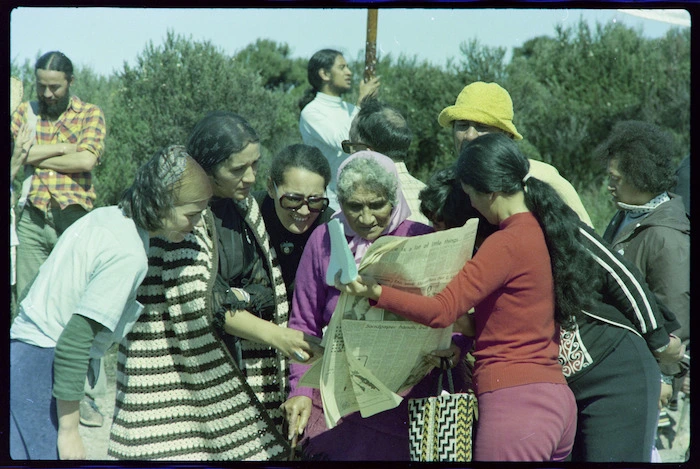
A new resource has released by the National Library to coincide with the 50th anniversary of the Māori Land March. "Ngā tapuwae o te hīkoi" is an online exhibition that shows a collection of photographs and ephemera from land rights and other activism in the 1970s. Many of the items have been held in the National Library archives, and have not previously been on public view.
- - - - - - - - - - - - - - - - - - - -
The exhibition is a bit like walking into an old museum, and wandering around the five themed galleries with interesting items on the wall. The galleries are named "Kia mau", "He tangata, he tangata, he tangata", "Kotahitanga and manaakitanga", "Kia puawai te reo" and "Ngā tapuwae". They are an invitation get lost in memories and connections from decades and protests past. Well worth a slow online amble. You may see people you recognise. You'll want to send links to their grandchildren.
- - - - - - - - - - - - - - - - - - - -
It was still in the 1970s that Jim Traue, the archivist from Alexander Turnbull Library, wrote to me out of the blue and asked for my papers and other bits and pieces from my involvement with the Land March. I could never have imagined that several of the items would appear in a virtual exhibition such as this, five decades later. We had yet to see the invention of the internet, let alone a personal computer.
- - - - - - - - - - - - - - - - - - - -
Day 8 — Sunday 21st September 1975
to Puriri Park Hall, Ōrewa
- - - - - - - - - - - - - - - - - - - - -


Day 9 — Monday 22nd September 1975
to Te Kāmaka Marae, Hato Petera College, Northcote
- - - - - - - - - - - - - - - - - - - - -
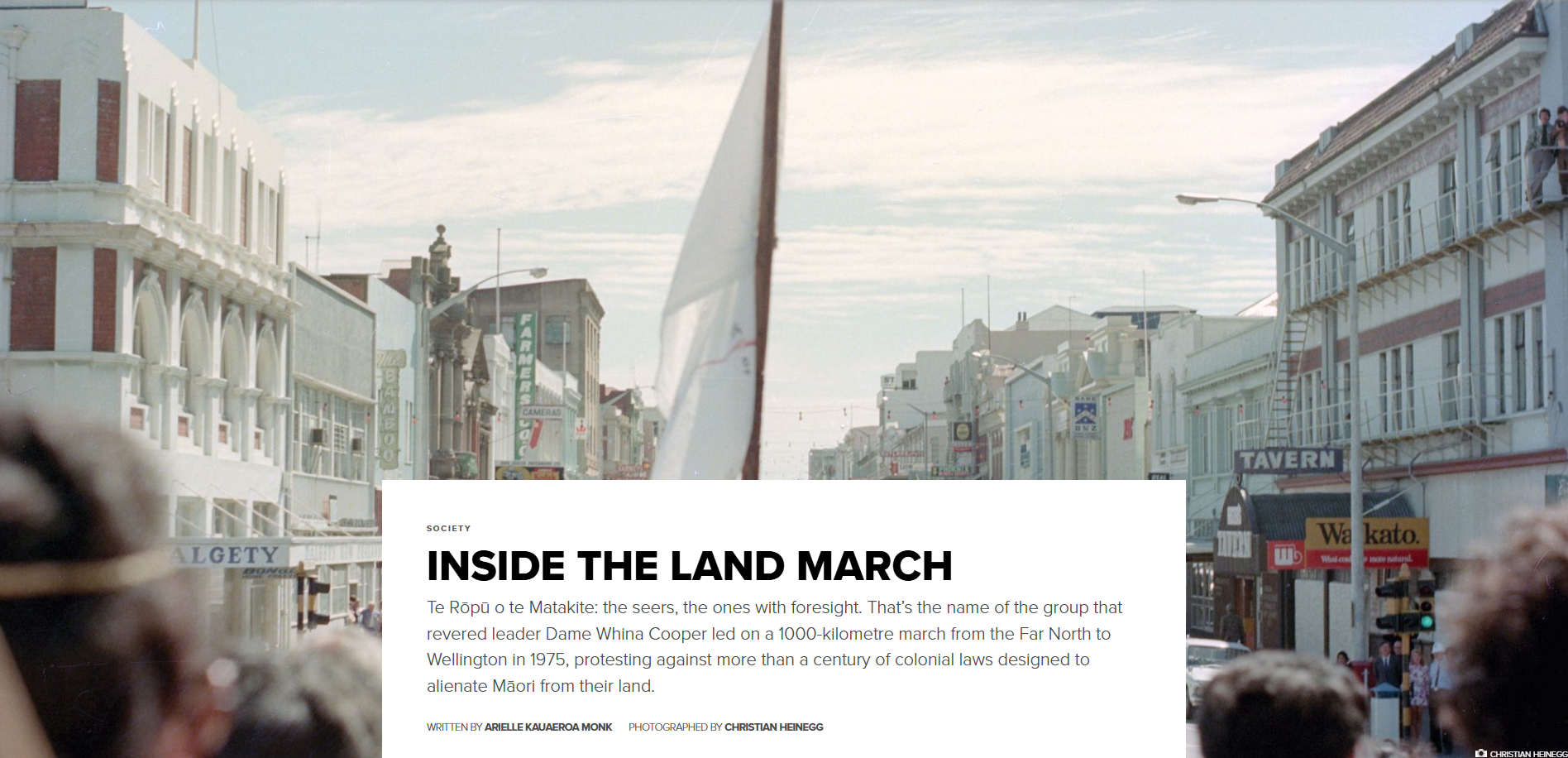
Inside the Land March (2022)
by Arielle Kauaeroa Monk
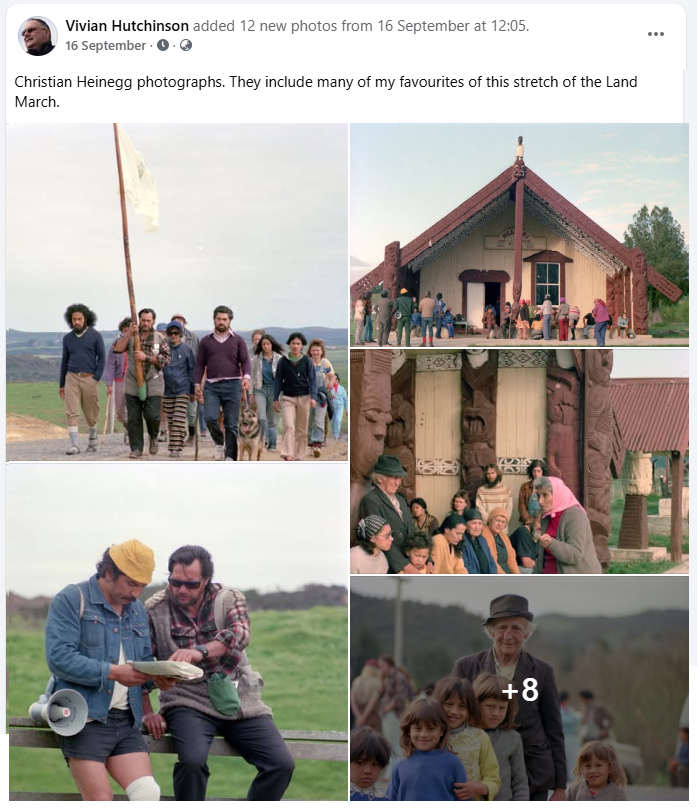
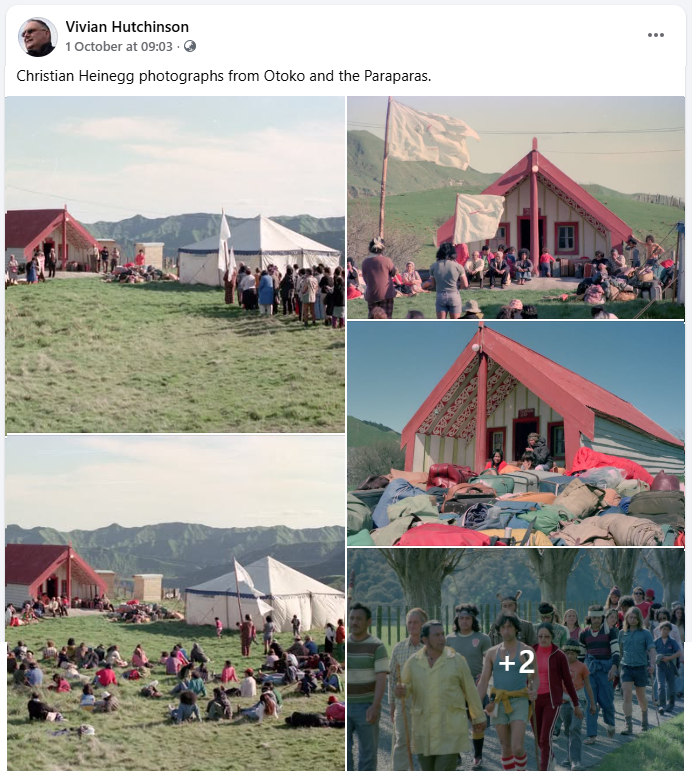
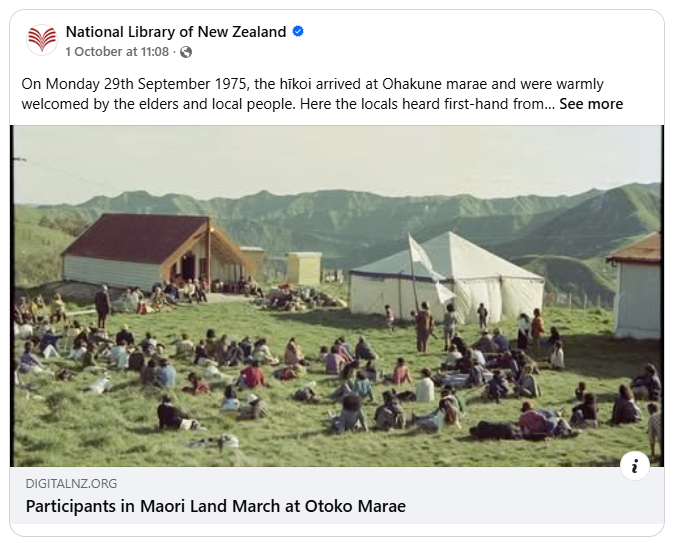
New Zealand Geographic, September 2022, gives an overview of the land march and its achievements, and features photographs taken by Christian Heinegg, who was also one of the 1975 land marchers. The Heinegg collection of Matakite photographs is currently on display at the National Library, and have been featured in the Library's regular Facebook posts this month to mark the 50th anniversary of the Land March.
Day 10 — Tuesday 23rd September 1975
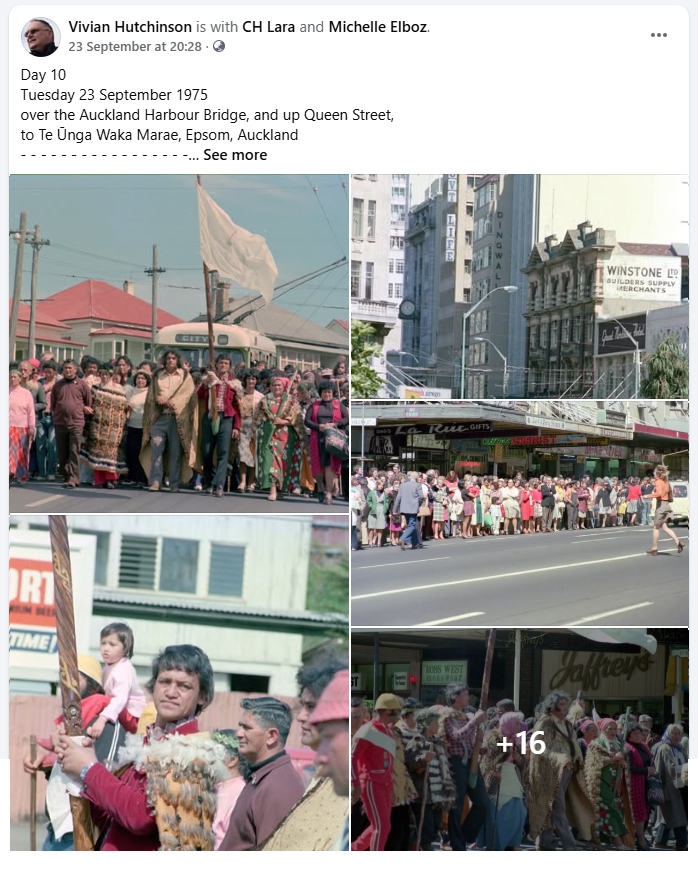
over the Auckland Harbour Bridge, and up Queen Street,
to Te Ūnga Waka Marae, Epsom, Auckland
- - - - - - - - - - - - - - - - - - - - -
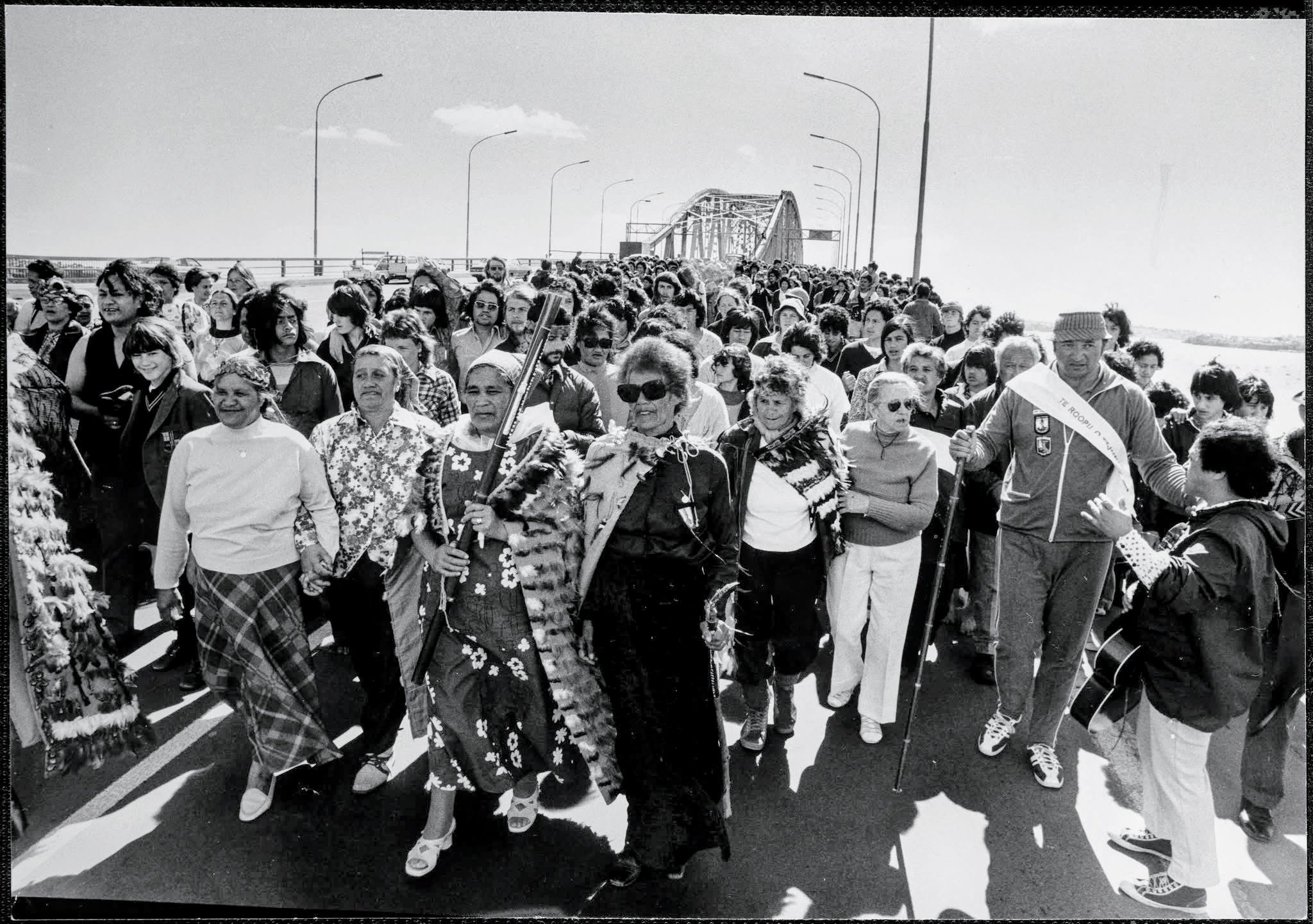
Witi Ihimaera on Dame Whina Cooper and the Auckland Harbour Bridge (2012)
Te Ahi Kaa radio programme (2015)
Radio New Zealand 18 October 2015
Te Ahi Kaa on the 1975 Maori Land March - with coverage of a panel discussion hosted at the National Library by Paul Diamond and featuring former land marchers Cyril Chapman, vivian Hutchinson, and David Williams.
- - - - - - - - - - - - - - - - - - - - -
"It would be another 21 days on the backbone of Te Ika a Māui before the march, now in its thousands, arrived at Parliament to present Prime Minister Bill Rowling with a petition and a "Memorial of Right", completing a protest that has echoed in Aotearoa ever since." — The Bigger Picture, 23 September 1975, Listener, 20 September 2025
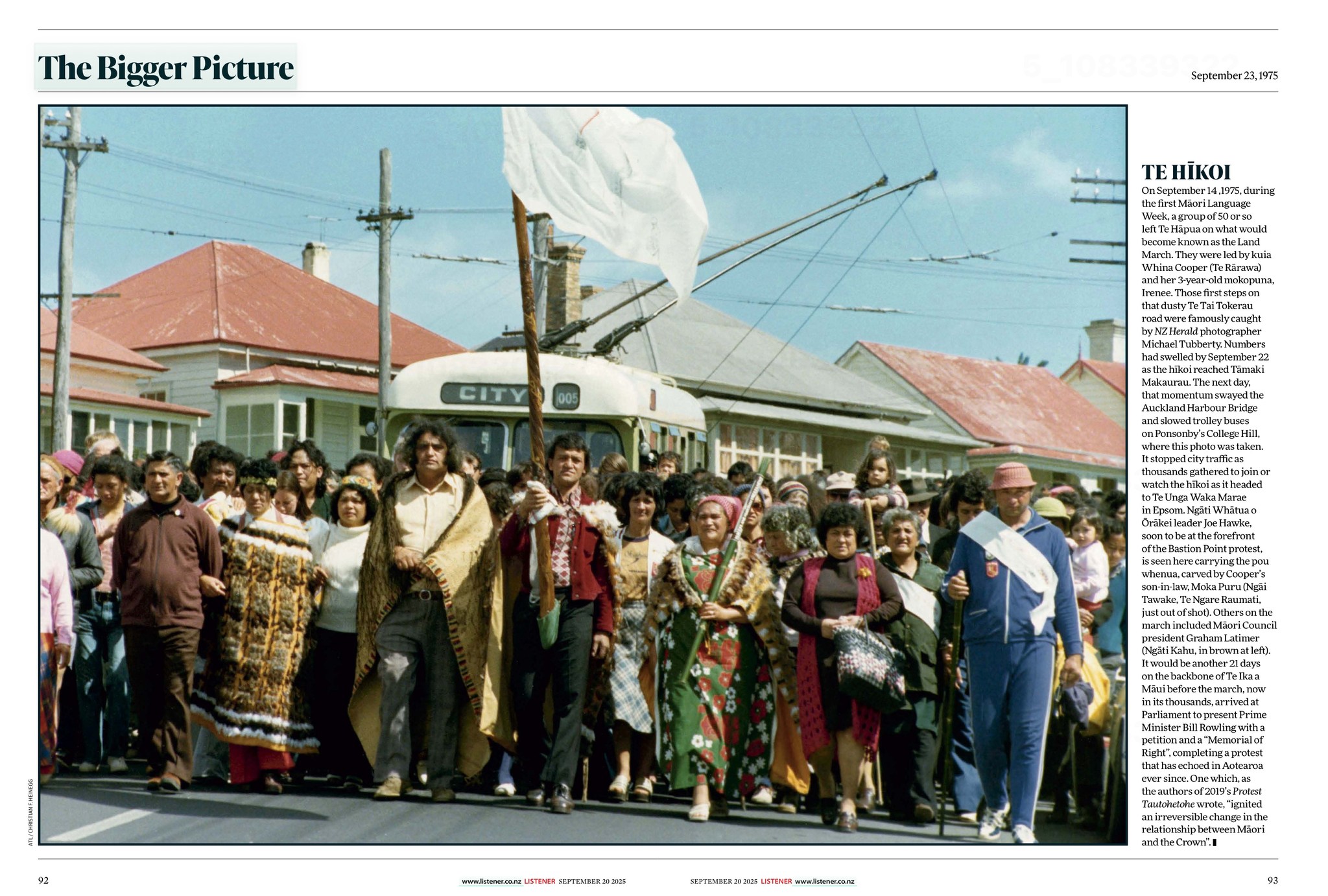 - - - - - - - - - - - - - - - - -
Fifty years ago, photographer and marcher Christian Heinegg captured these moments from Auckland's Queen Street.
After the Harbour Bridge, we knew the march was unstoppable. And we still had several weeks ahead during which we could continue to make the case for fundamental changes to the laws that were alienating Māori from their land.
For me, there was a special moment walking up Queen Street and looking at the faces of onlookers on the footpath or looking out the windows of the shops. This was something different. This march wasn't a civic ceremony or a Santa Parade. It was a very unusual political protest. These marchers had walked from the Far North. They were singing and there were no banners or placards screaming at you and telling you what to think or feel. And those bystanders, those shoppers in Queen Street, most of them Pākehā, were just standing there silently in respect and a little bit in awe. I saw children with faces of wonder. I saw old men with tears in their eyes. Something special was happening but they didn’t quite know what it was. It felt historic, and they had somehow found themselves in the middle of it.
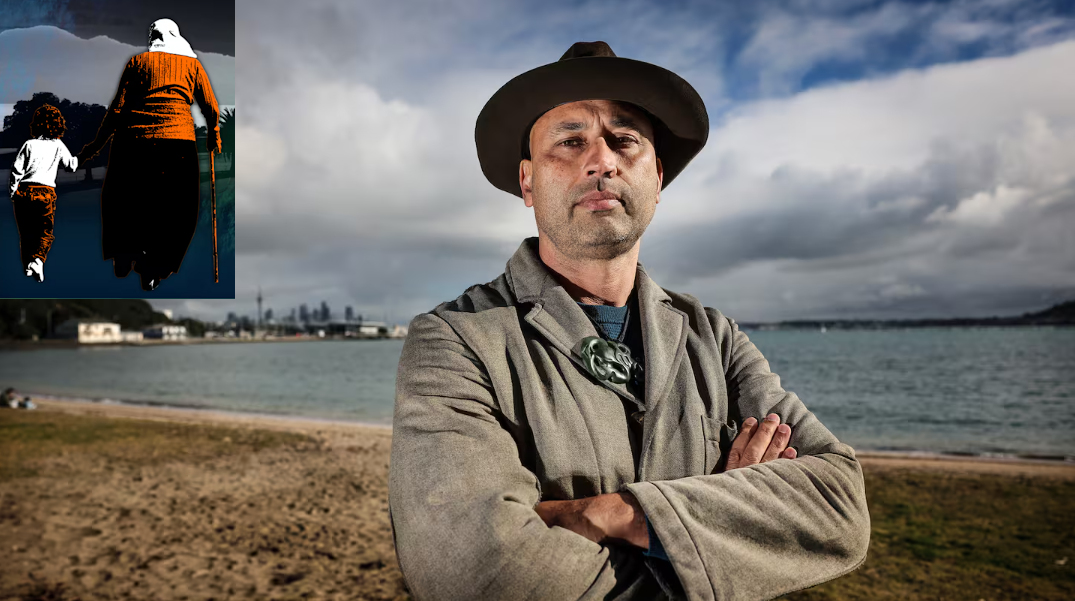
Whenua: Ngāti Whātua Ōrākei - how Auckland's biggest iwi lost its land
by Julia Gabel and Joseph Los'e
NZ Herald 25 July 2024 (NZH paywalled)
Deputy Chairman of the Ngāti Whātua Ōrākei Trust, Ngarimu Blair shares the story of the remarkable fall and rise of Auckland's Ngāti Whātua.
Day 11 — Wednesday 24th September 1975
to Mangatangi Marae, Mangatāwhiri
- - - - - - - - - - - - - - - -
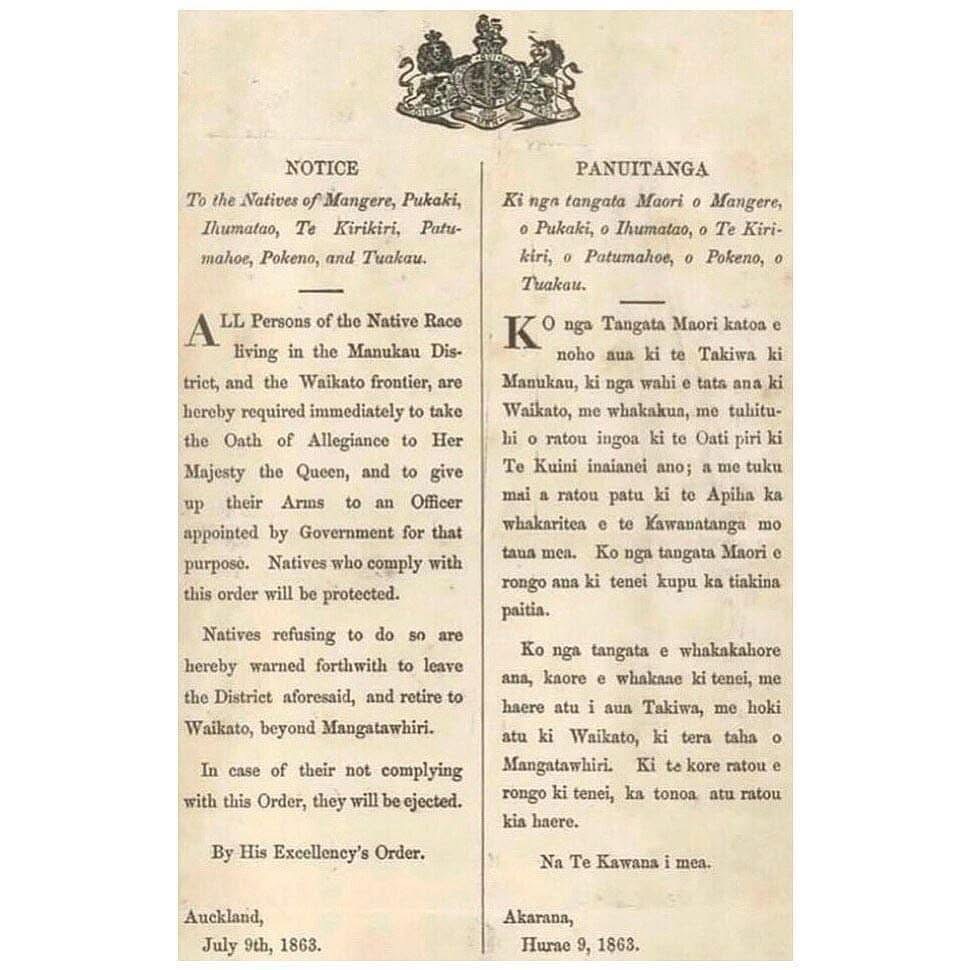
the Māori Land March crosses the Mangatāwhiri stream into the heart of the confiscated lands of Waikato Tainui.
- - - - - - - - - - - - - - - - -
In 1863, British troops invaded Waikato by crossing the Mangatāwhiri Stream, which the Kīngitanga (Māori King movement) had declared an aukati (a line not to be crossed).
The Kīngitanga had been formally established in 1858. The government saw its refusal to sell land as an impediment to European settlement. Kīngitanga warriors fought in Taranaki in 1860–61, fuelling fears that the movement posed a challenge to British sovereignty. In January 1863, Governor George Grey announced his intention to dig around the Kīngitanga until it fell.
https://nzhistory.govt.nz/british-forces-invade-the-waikato
- - - - - - - - - - - - - - - - -
What a nation or society choose to remember and forget speaks to its contemporary priorities and sense of identity. Understanding how that process works enables us to better imagine a future with a different, or wider, set of priorities. - 'Fragments from a Contested Past: Remembrance, Denial and New Zealand History' by Joanna Kidman, Vincent O'Malley, Liana MacDonald, Tom Roa and Keziah Wallis. https://www.facebook.com/PeaceMovementAotearoa/posts/5017364218310907
Day 12 — Thursday 25th September 1975
to Tūrangawaewae Marae, Ngāruawāhia
- - - - - - - - - - - - - - - - - - - - -
The 1863 invasion of the Waikato was the defining conflict of New Zealand, reinforcing the Crown’s power, entrenching one of Aotearoa’s oldest political institutions (the Kiingitanga) and resulting in land confiscations that continue to shape New Zealand today.
NZ Wars: Stories of Tainui Documentary (50 mins)
RNZ Radio New Zealand
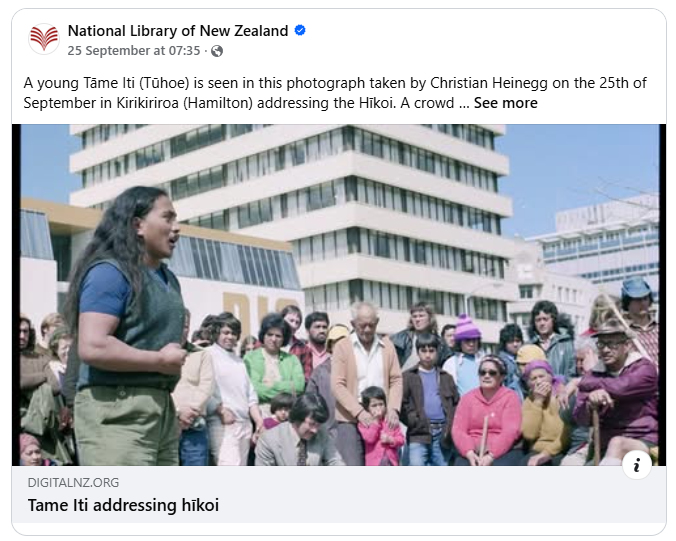
Whenua: 'We used to live in a castle' - Tainui on rebuilding an empire after losing almost everything.
by Julia Gabel
NZ Herald 25 July 2024 (NZH paywalled)
How British Settler invasion of the Waikato forced Tainui into a 20-year exile, as told by Kingitanga spokesman Rahui Papa
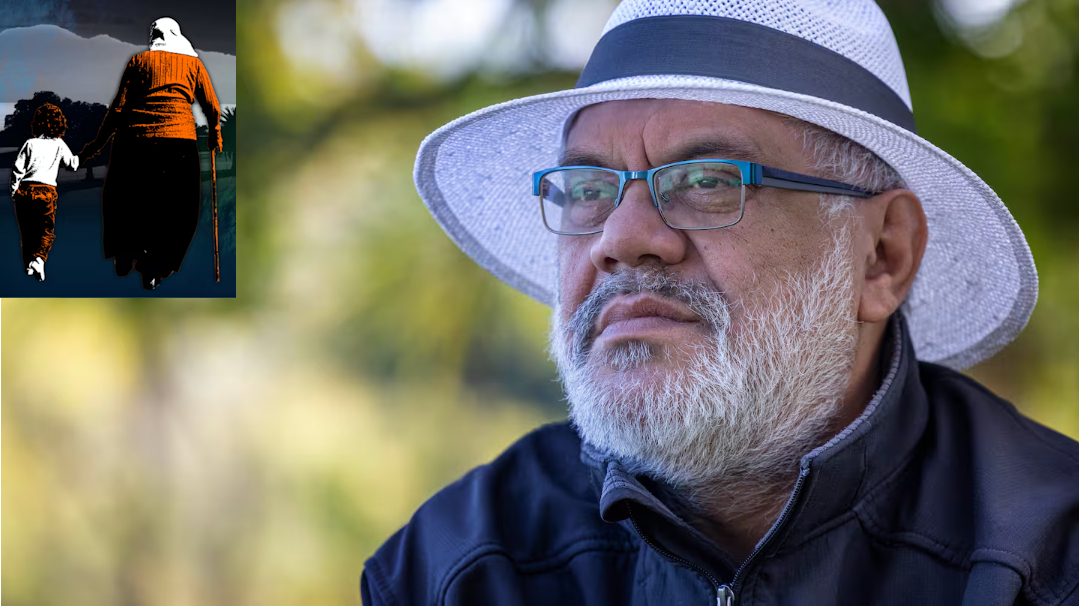
The NZ Herald's acknowledgement of its role in early coverage of the invasion can be read here
25 July 2024 (NZH Paywalled)
The New Zealand Herald urged on British troops against "rebel" Māori during the 1863 invasion of Waikato.
Day 13 — Friday 26th September 1975
to Hui Te Rangiora Marae, Hamilton
and Nga Hau e Wha, Mangatoatoa, Kihikihi
- - - - - - - - - - - - - - - - - - - - -
1975 Matakite Māori Land March arrives at Rewi Maniapoto’s grave
Day 14 — Saturday 27th September 1975
to Te Tokanganui-a-noho Marae, Te Kuiti
- - - - - - - - - - - - - - - - - - - - -
The Scottie Productions 2015 documentary "Hikoi: The Land March" marks 40 years since the land march and is now available to view on Youtube.
Day 15 — Sunday 28th September 1975 (rest day)
at Te Tokanganui-a-noho Marae, Te Kuiti
- - - - - - - - - - - - - - - - - - - - -
HERITAGE TARANAKI PANEL DISCUSSION
next Friday 3rd October 2025
6.30pm – Please arrive by 6.20 at the latest
Plymouth International Grand Ballroom, New Plymouth
It’s 50 years since Dame Whina Cooper’s Land March and the establishment of the Waitangi Tribunal – What have we learned? What heritage have we created?
Chair – Ruakere Hond
• Michael Belgrave – historian, author
• Alistair Reese – historian, theologian
• Dinnie Moeahu – NPDC Councillor
• Liana Poutu – Te Pouwhakarae o Te Kotahitanga o Te Ātiawa
• Tuhi-Ao Bailey – Chair of Parihaka Papakainga – Ngāti Mutunga, Te Ātiawa, Taranaki
• Debbie Ngarewa-Packer – MP, Co-Leader of Te Pāti Māori.
All welcome to this FREE event. Koha appreciated.
Registration not required to attend - just turn up on the evening.

- - - - - - - - - - - - - - - - - - - - -
A rest day. Reading a picture book to the mokopuna / grandchildren.
- - - - - - - - - - - - - - - - - - - - -
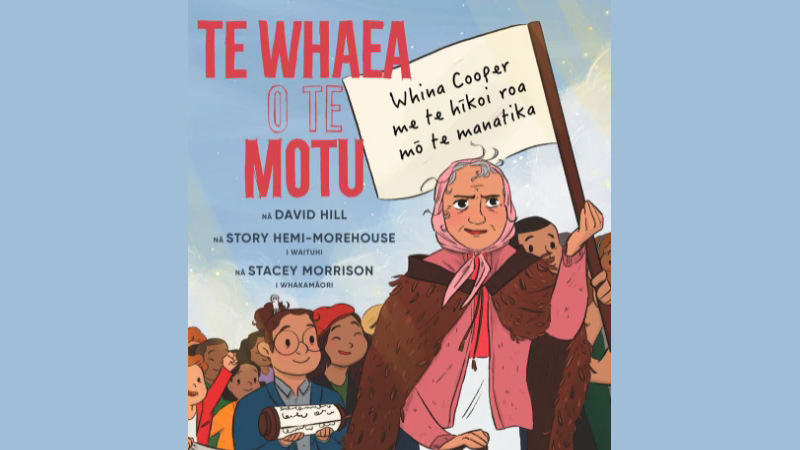
Te Whaea o te Motu: Whina Cooper me te hīkoi roa mō te manatika by David Hill, illustrated by Story Hemi-Morehouse and translated by Stacey Morrison / Mother of the Nation: Whina Cooper and the long walk for justice by David Hill and illustrated by Story Hemi-Morehouse.
Books / The Spinoff 12 August 2025
by Stacey Morrison and David Hill
- - - - - - - - - - - - - - - - - - - - -
Illustrating Whina Cooper's hīkoi, 50 years on
by Andre Chumko, The Post 7 October 2025
Day 16 — Monday 29th September 1975
to Ngāpuwaiwaha Marae and War Memorial Hall, Taumarunui
- - - - - - - - - - - - - - - - - - - - -
Kim Hill interview with vivian Hutchinson (2015)
Radio NZ National Programme
10th October 2015

Day 17 — Tuesday 30th September 1975
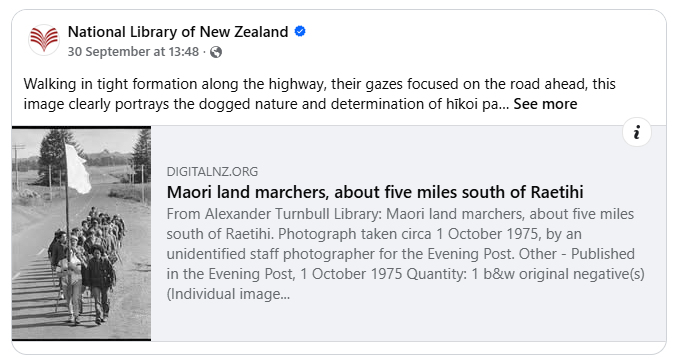
to Raetahi and Maungarongo Marae, Ohākune
- - - - - - - - - - - - - - - - - - - - -
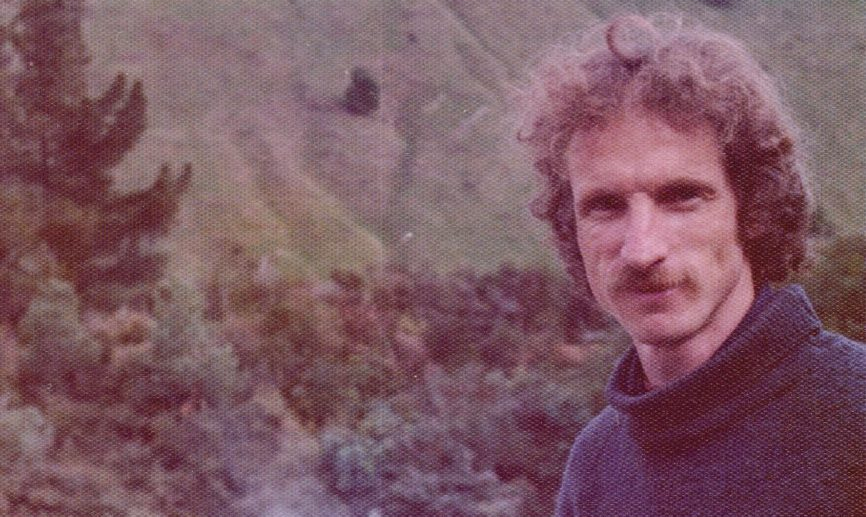
Christian Heinegg on the March
by Nic Low , Issue 177, NZ Geographic Sep-Oct 2022
New Zealand Geographic: "Heinegg learned to observe the world from his father, a professional photographer ... "
Day 18 — Wednesday 1st October 1975
to Ōtoko Pā, Ōtoko
- - - - - - - - - - - - - - - - - - - - -
Day 19 — Thursday 2nd October 1975
to Kai Iwi Marae, Whanganui
- - - - - - - - - - - - - - - - - - - - -
A land grab in the 21st century is not a matter of soldiers and guns with Majors and Generals, and Colonial Native Ministers riding on white horses. It is not so obviously a matter of surveyors, or pegs and property maps. Instead, a modern land grab is more a matter of lawyers, politicians, policy advisers and public submissions. The instruments of extraction here are legislation, reports from Parliamentary Select Committees, press releases, public relations and social media. — from Waitara: A Second Reading (2017) by vivian Hutchinson
- - - - - - - - - - - - - - - - - - - - -
A Citizen in Waitara (2023)
A Preface to some Waitara Papers
by vivian Hutchinson
Whenua: Taranaki's Hidden Story - Why Parihaka invasion echoes today
by Julia Gabel and Chris Knox
NZ Herald 5th November 2025 (NZH paywalled)
Retracing the events that made Parihaka an international symbol of non-violent action against injustice, with Chair of the Te Kotahitanga o te Atiawa Trust, Liana Poutu.
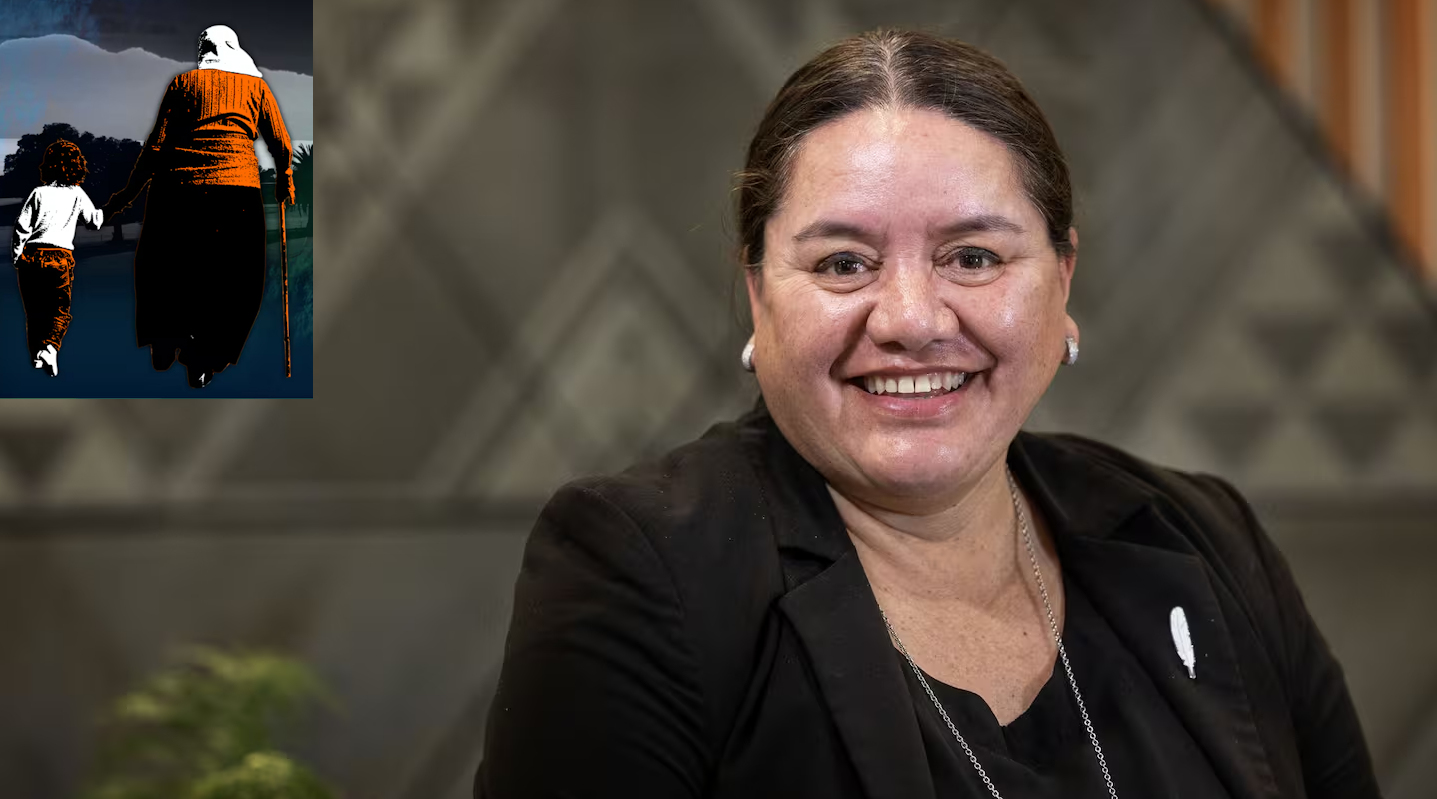
Day 20 — Friday 3rd October 1975
to Rātana Pā, Rātana
- - - - - - - - - - - - - - - - - - - - -
Radio NZ Upbeat with photographer John Miller on the Maori Land March
interview with Eva Radich
Radio New Zealand National 29 October 2015

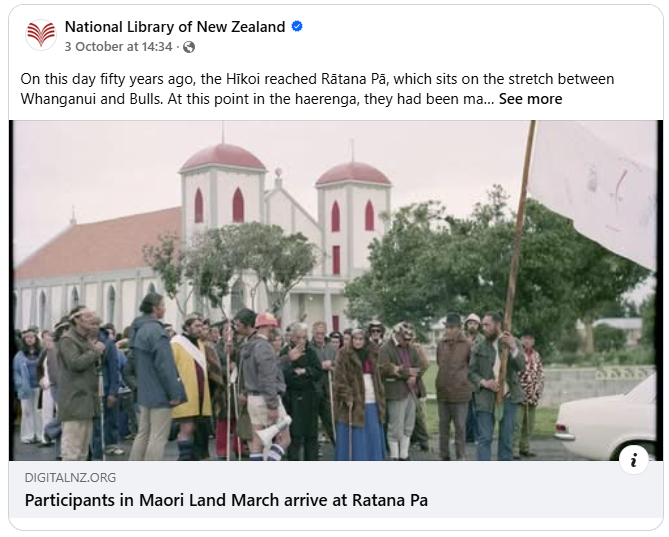
Day 21 — Saturday 4th October 1975 (rest day)
at Rātana Pā, Rātana
- - - - - - - - - - - - - - - - - - - - -
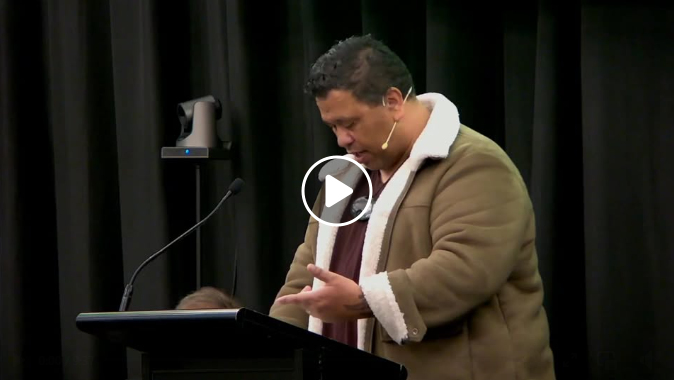
"History does not always comfort us. It can be unsettling. It demands that we look again at the events we thought we once understood. The Land March unsettled a nation which believed that the land losses were a story finished. The Waitangi Tribunal unsettled the Crown by holding a mirror up to its broken promises. And yet, out of the many historical unsettling times came the possibilities of justice, reclamation and reconciliation."
- Dinnie Moeahu
- - - - - - - - - - - - - - - - - - - - -
New Plymouth District Councillor Dinnie Moeahu speaking at
Taranaki Heritage Panel Discussion 2025
The Plymouth Hotel Ballroom
Friday 3rd October 2025
on 50 years since Dame Whina Cooper's Land March
and the establishment of the Waitangi Tribunal.
- - - - - - - - - - - - - - - - - - - - -
video from Te Korimako o Taranaki / Taranaki Heritage Month
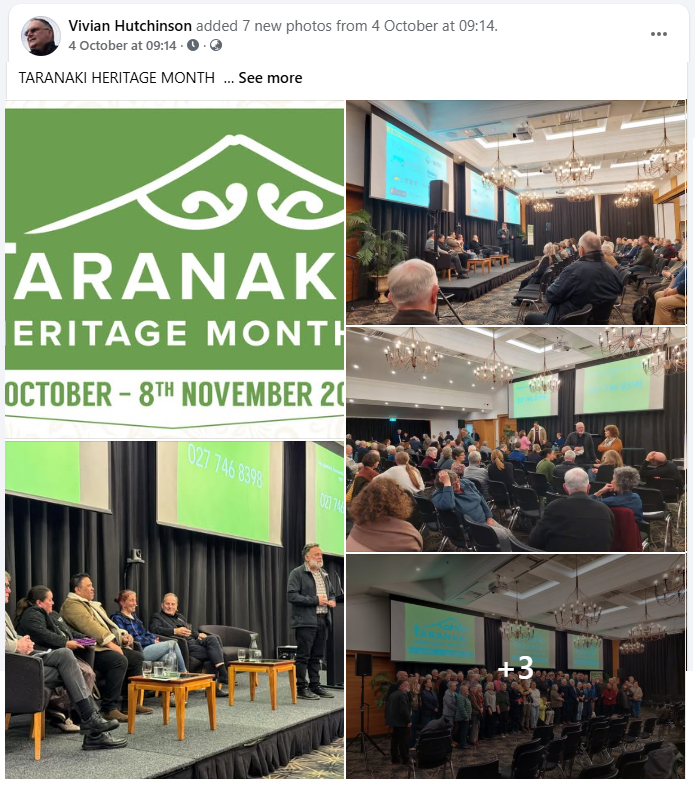
TARANAKI HERITAGE MONTH PANEL and SYMPOSIUM
Friday 3rd October 2025 Panel Discussion - chaired by Ruakere Hond - Michael Belgrave, Alistair Reese, Dinnie Moeahu, Liana Poutu and Tuhi-Ao Bailey
Saturday 4th October 1975 'That Moment in NZ History' Symposium with Michael Belgrave and Alistair Reese
Plymouth International Grand Ballroom, New Plymouth
- - - - - - - - - - - - - - - - - - - - -
It’s 50 years since Dame Whina Cooper’s Land March and the establishment of the Waitangi Tribunal – What have we learned? What heritage have we created?
and Symposium / Wananga: What actually happened at Waitangi in February 1840?
Day 22 — Sunday 5th October 1975
to Parewahawaha Marae, Bulls
- - - - - - - - - - - - - - - - - - - - -
Background to the making of Te Matakite o Aotearoa: The Māori Land March
Nga Taonga Sound and Vision 11 September 2025
"Te Matakite o Aotearoa" was the first ever New Zealand documentary to be shown on TV2. Geoff Steven, of the film-maker's co-operative "Alternative Cinema" directed the filiming, with funding scraped together with the help of anti-racism church groups, the Polynesian Panther Party and Ngā Tamatoa.
Geoff Steven: " This seemed to me an ideal opportunity for me to have a shot at making an observational type of documentary and at the same time help spread the message of the march to a wide audience. The participants on the march would tell the story of its aims and message. I didn’t want to use any explanatory voice over which was the standard style of documentary at that time. There would be no journalist standing talking to the camera explaining what they thought was important and describing what was happening behind them!"
- - - - - - - - - - - - - - - - - - - - -
Te Matakite o Aotearoa (1975)
full documentary can be viewed at Nga Taonga Sound & Vision

Day 23 — Monday 6th October 1975
to Te Rau o Te Aroha
Māori Battalion War Memorial Hall, Palmerston North
- - - - - - - - - - - - - - - - - - - - -
“ ... In relation to Maori lands, the government is like a dog crouching under a table on which somebody is crumbling a loaf of bread. Each time that crumbs fall to the ground the government licks them up with its tongue. It hopes in time to devour the whole loaf. This is the effect of the present Maori land legislation.” — James K. Baxter, He Tokotoko Mo Te Koroheke (1972)
- - - - - - - - - - - - - - - - - - - - -
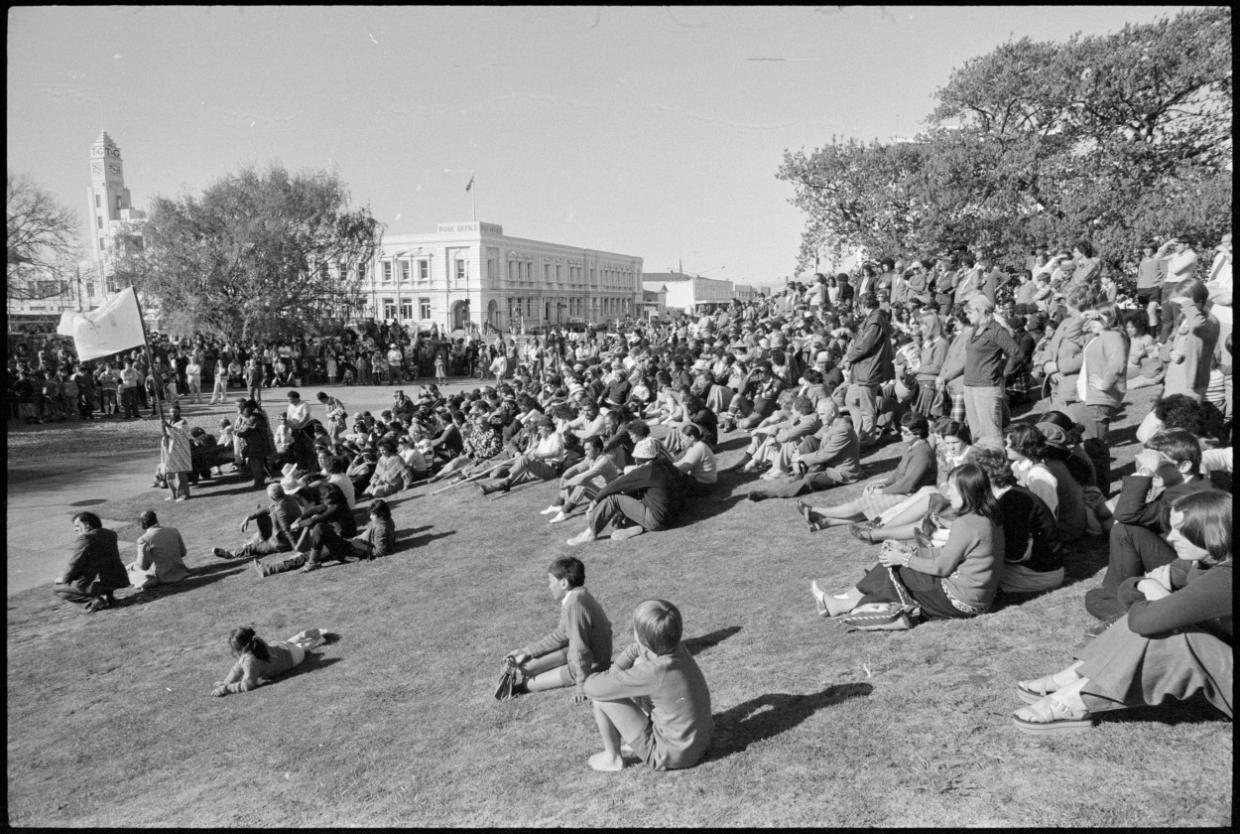
Palmerston North photos from Manawatu Evening Standard
for more, see https://manawatuheritage.pncc.govt.nz/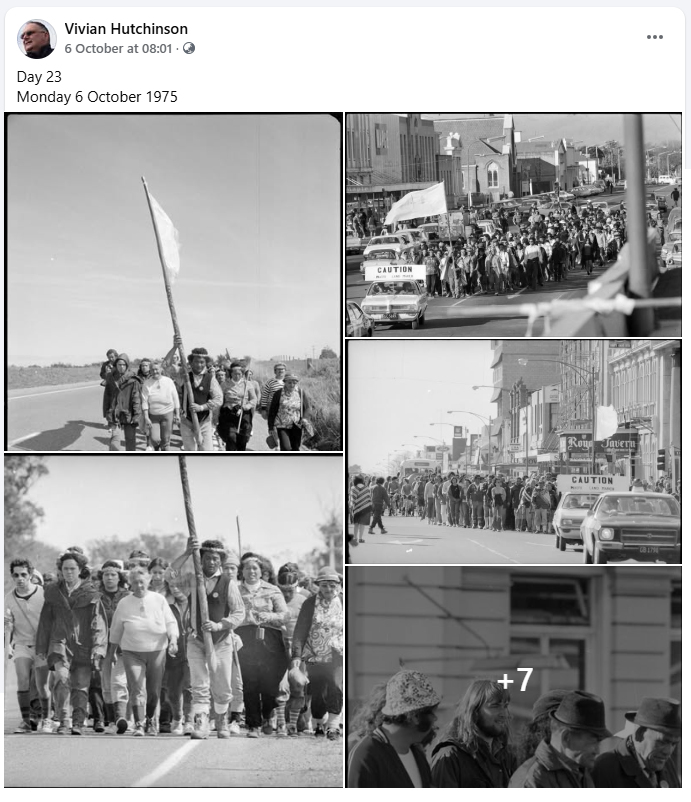

'Momentum that could prove unstoppable':1975 Māori land march comes to Palmerston North
by George Heagney
Manawatu Standard 6th October 2025
The Evening Standard in 1975: The marchers made appeals for food donations. Offers of bedding and medical support flowed in, and they were donated 100 sheep from the freezing works in Longburn and Feilding.
"Confronting their column is a moving experience and marching with it is an insight. None of the passing motorists was irreverent. Sadness was obvious in the eyes of the old people who stood at their gates to watch Matakite pass. The 200 marchers, led by their flag, are bringing their problem out to the people and they will not fail."
- - - - - - - - - - - - - - - - - - - - -
Te Rōpū o te Matakite, the Land March Exhibition
Palmerston North Central Library
October 6th - 16th 2025
The exhibition features photographs taken by the Manawatu Standard, including many that have never before published.
"A historic moment and important record of Aotearoa New Zealand's heritage."
Tā Tipene O’Regan on land loss, survival & the Ngāi Tahu story
by Julia Gabel
NZ Herald 25 July 2024 (NZH paywalled)
Tā Tipene O’Regan explains the Ngāi Tahu story.

Day 24 — Tuesday 7th October 1975 (rest day)
Te Rau o Te Aroha
Māori Battalion War Memorial Hall, Palmerston North
- - - - - - - - - - - - - - - - - - - - -
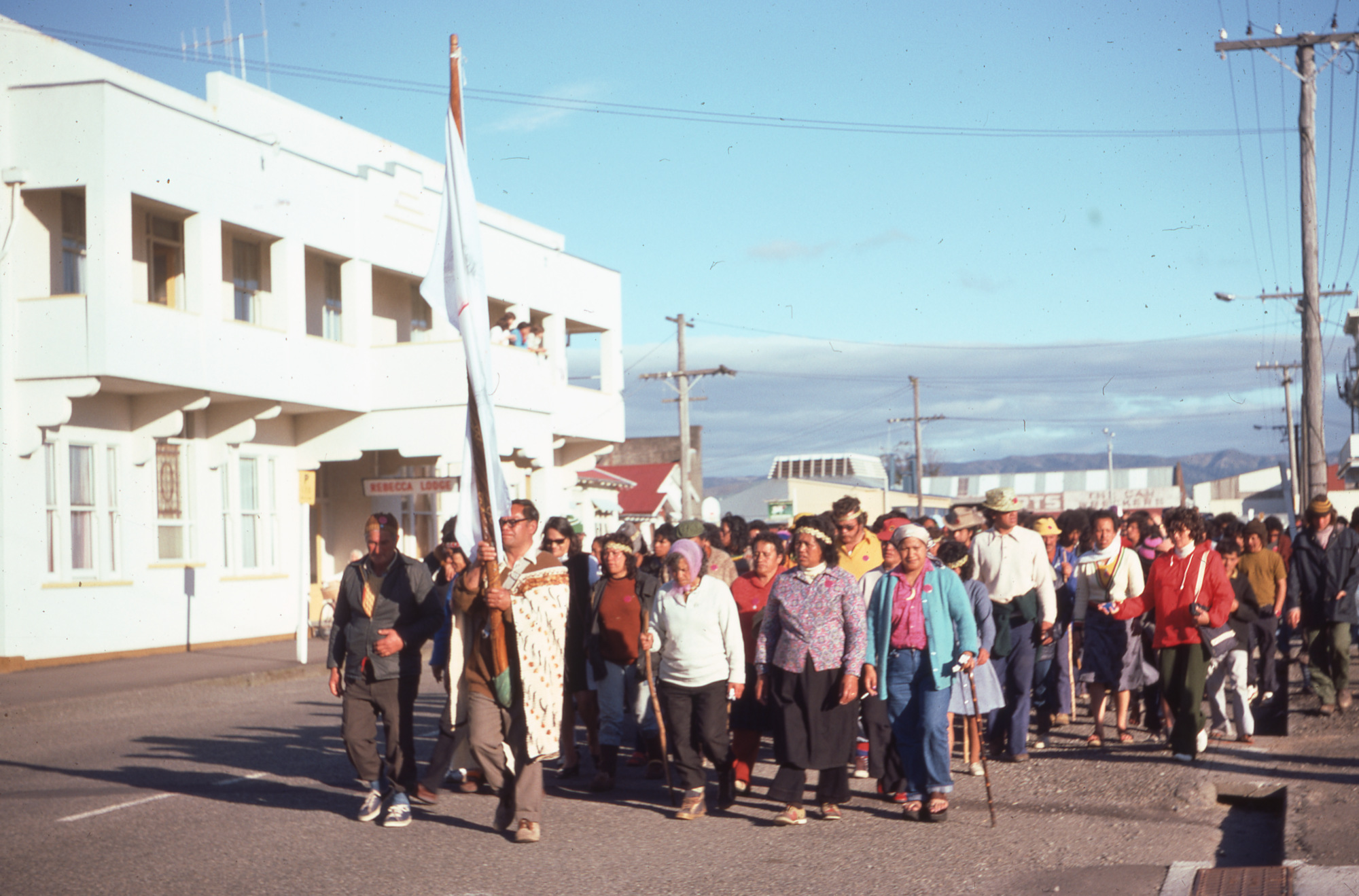
"[The Maori Land March] wants to press for the abolition of monocultural laws pertaining to Maori land, and establish new laws for Maori land based on their own cultural values. Matakite wants to establish communal ownership of land within the tribe as a legitimate title equal in status to the individual title." — Mrs Whina Cooper MBE CBE JP (1975)
- - - - - - - - - - - - - - - - - - - - -
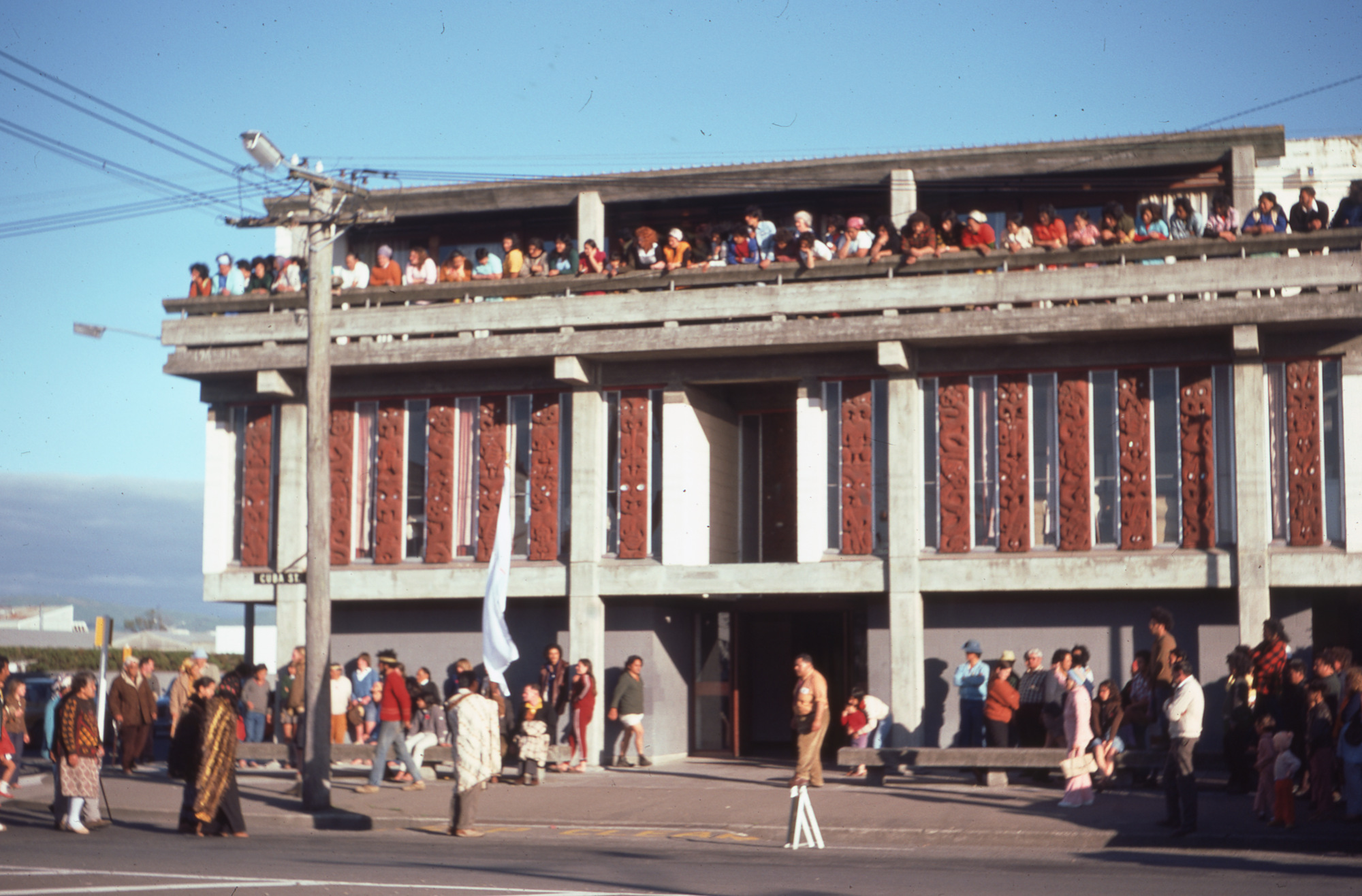
Photos: Te Roopu o te Matakite Land Marchers arriving at Te Rau Aroha, Māori Battalion War Memorial Hall, Palmerston North, yesterday
Day 25 — Wednesday 8th October 1975
to Poutū Pā, Shannon
- - - - - - - - - - - - - - - - - - - - -
1975 Matakite Māori Land March arrives at Shannon: Welcome to the marae with John Te One Hippolite

The Waitangi Tribunal: 50 years of damning criticisms and 'mild' recommendations
by David Williams
Opinion / Ātea in The Spinoff 8th October 2025
- - - - - - - - - - - - - - - - - - - - -
The Waitangi Tribunal celebrates its 50th anniversary this week. Current tribunal member and law lecturer David Williams shares some personal reflections in The Spinoff on its origins and impact.
- - - - - - - - - - - - - - - - - - - - -
"As the Māori Land March walked from Te Hāpua to Wellington, the bill to establish a Waitangi Tribunal moved through the parliamentary processes. The opposition wavered between criticising the proposed tribunal as a toothless tiger, and fear that its reports might lead to debate, dissension, and even divisiveness within the community. The bill received the royal assent on October 10, three days before thousands supporting Te Matakite o Aotearoa arrived on the steps of parliament."
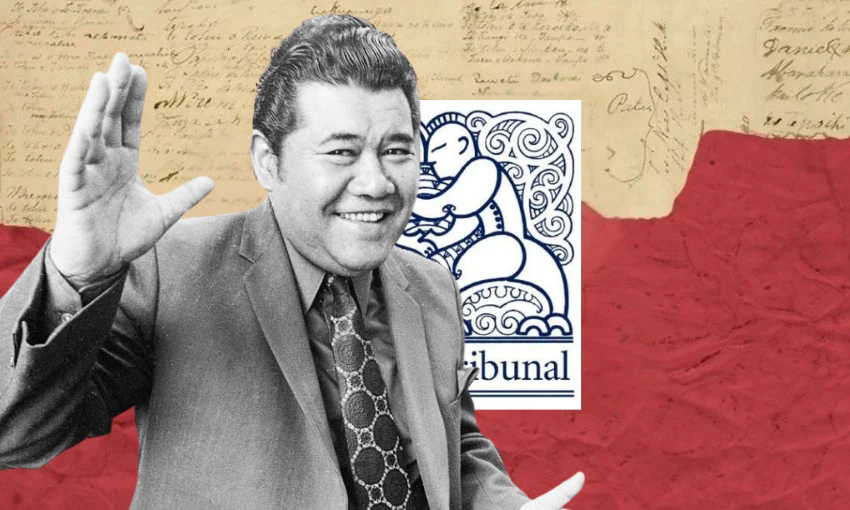
Karanga Rā: 50 Years of The Waitangi Tribunal
30 min documentary
commemorating 50 years since the creation of the Waitangi Tribunal, reflecting on it’s profound impact in reshaping Treaty conversations across Aotearoa.
https://www.maoriplus.co.nz/movie/karanga-ra-50-years-of-the-waitangi-tribunal
- - - - - - - - - - - - - - - - - - - - -
Ko te Tōrino: Haere Whakamua, Haere Whakamuri
50 Years of the Waitangi Tribunal
Conference at Te Herenga Waka / Victoria University of Wellington
9th-10th October 2025
A conference designed to reflect upon the last 50 years work of the Waitangi Tribunal through the independent lens of experienced practitioners, scholars, and Māori communities. Also an opportunity to compare and contrast the Waitangi Tribunal against other international models for the hearing of indigenous peoples claims.
https://www.wt50thconference.co.nz/
Day 26 — Thursday 9th October 1975
to Tukorehe Marae, Kuku, Otaki
- - - - - - - - - - - - - - - - - - - - -
Nine to Noon Katherine Ryan interviews Cyril Chapman (2015)
Radio New Zealand National 13 October 2015

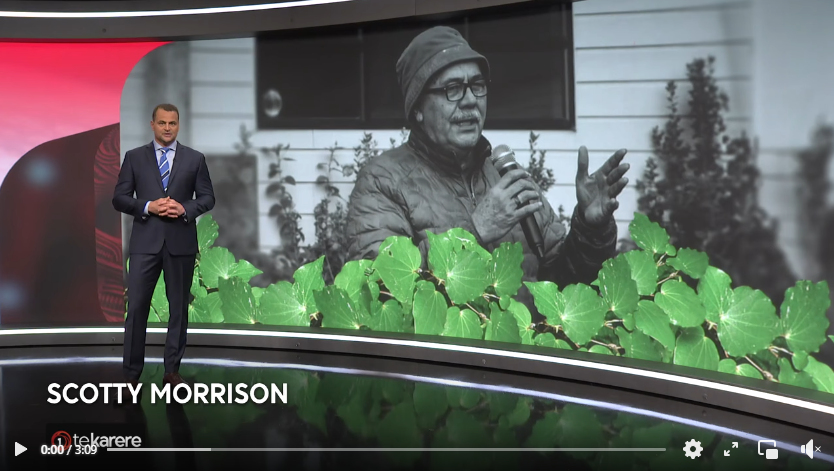
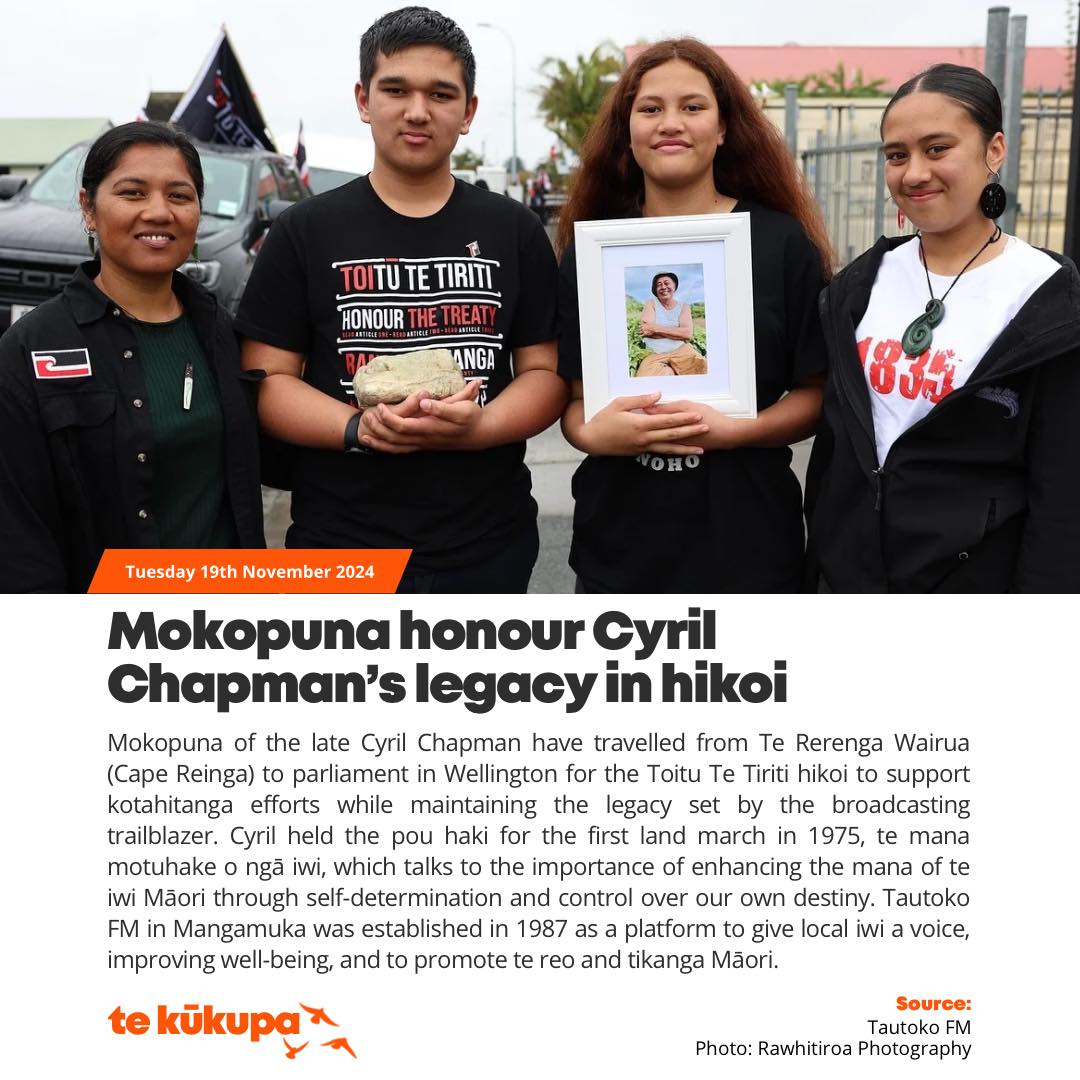
Cyril Tainui Chapman (1954-2024)
Cyril Chapman was the main bearer of the pou whenua for the Māori Land March of 1975, and was a life-long land rights activist. He was also a Te Reo advocate and broadcaster, helping create Radio Tautoko in the late 80s and leading the Mangamuka station up until his death last year.
Day 27 — Friday 10th October 1975
to Toa Rangatira, Takapūwāhia Marae, Porirua
- - - - - - - - - - - - - - - - - - - - -
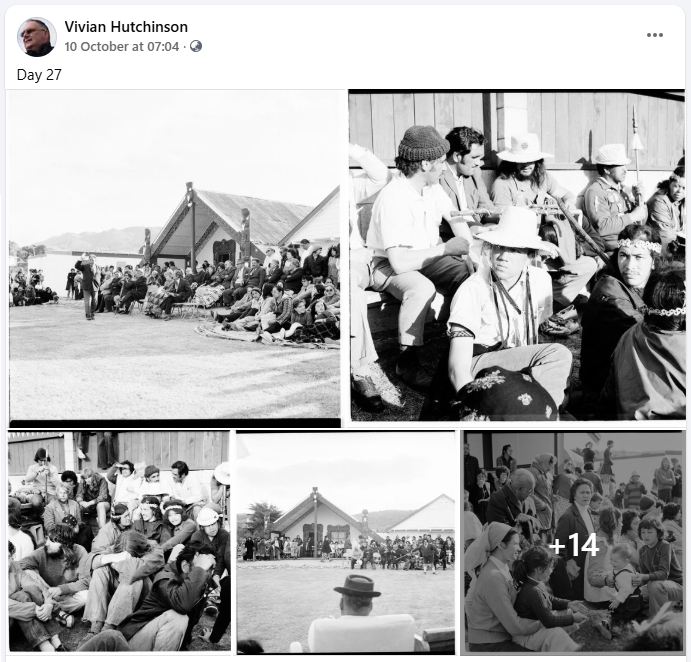
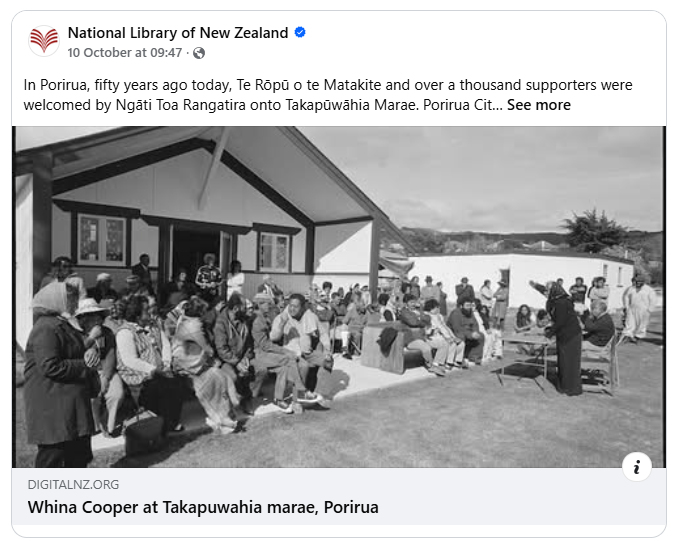
Te Roopu o te Matakite arrives at Takapūwāhia Marae, Porirua
photos by Ans Westra, National Library collection
Members celebrate 50 years of the Waitangi Tribunal
by Tuwhenuaroa Natanahira
RNZ Radio New Zealand News Te Ao Māori 9th October 2025
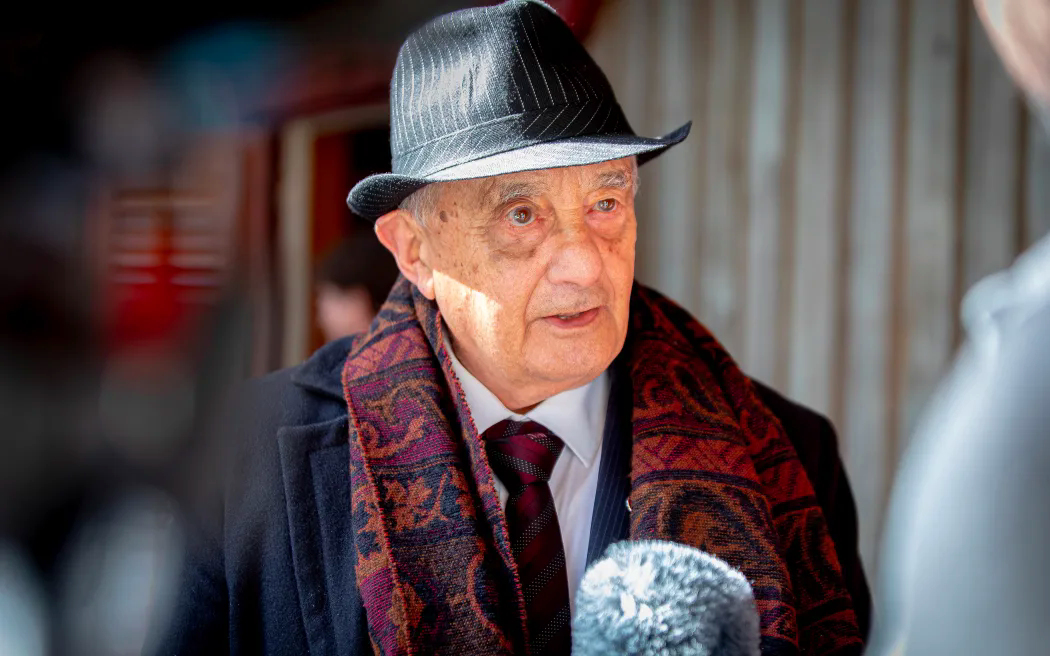
"What we have achieved in this country is a huge cultural shift over 50 years. You go back 50 years ago and we were talking assimilation, we were talking that there will be just one people and we all had to be the same. What we are thinking of now is that unity and peace comes from respecting difference, not from assuming that we all must be the same or that one group is dominant over another. We've made a seismic shift in New Zealand. We have redefined our national identity." — former Waitangi Tribunal Chair Sir Eddie Durie
Day 28 — Saturday 11th October 1975
at Toa Rangatira, Takapūwāhia Marae, Porirua
(rest and preparation day)
- - - - - - - - - - - - - - - - - - - - -
"Not One More Acre: Remembering the 1975 Land March" is an exhibition currently running at the Pātaka Bottle Creek Gallery in Porirua. This exhibition celebrates the manaakitanga of Ngāti Toa and reflects on this important moment of unity, resilience, and preparation before the final journey to Parliament. Takapūwāhia Marae has served as a vital place for te iwi Māori to gather, rest and prepare before delivering key national messages to Parliament, including the 1975 Land March, the 2004 Foreshore and Seabed hīkoi and the 2024 Hīkoi mo Te Tiriti / Toitū te Tiriti activations.
- - - - - - - - - - - - - - - - - - - - -
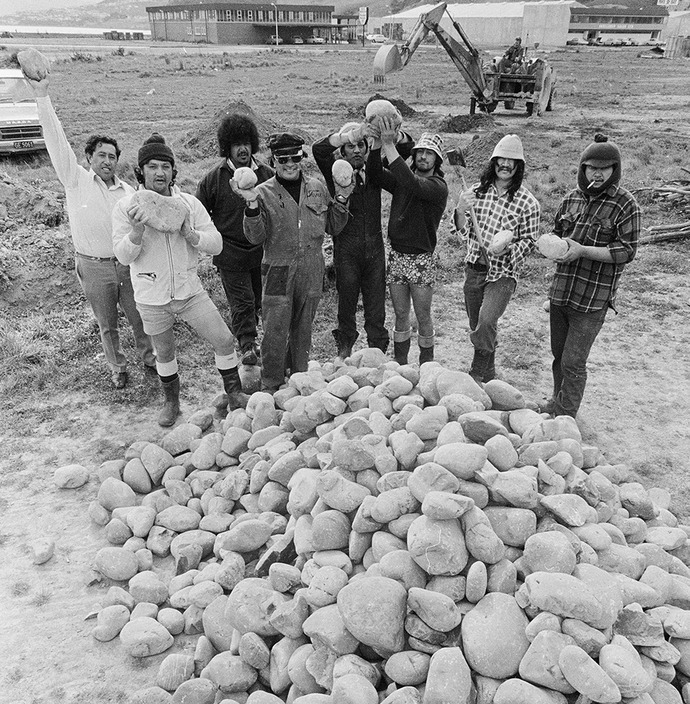
photograph: Stones for hangi to feed land marchers. from The Dominion Post
Whenua: Ngāti Toa Rangatira regains control over land at Whitireia 177 years after ‘serious injustice’
by Julia Gabel
NZ Herald 16 October 2025 (NZH paywalled)
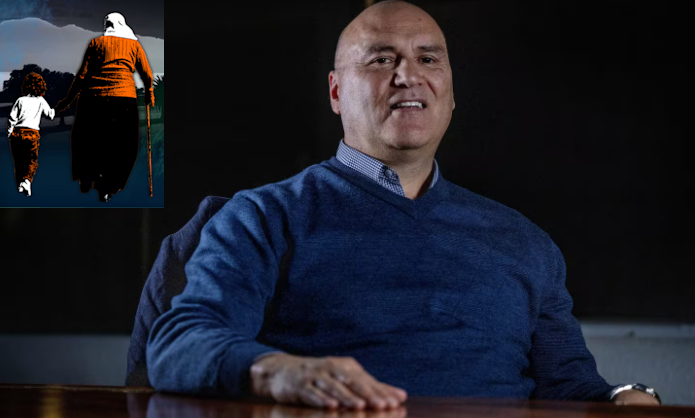
Ngāti Toa Rangatira is back in control of a huge parcel of land in Porirua, 177 years after the Crown committed a “serious injustice” and reneged on a deal.
Day 29 — Sunday 12th October 1975
at Toa Rangatira, Takapūwāhia Marae, Porirua
- - - - - - - - - - - - - - - - - - - - -
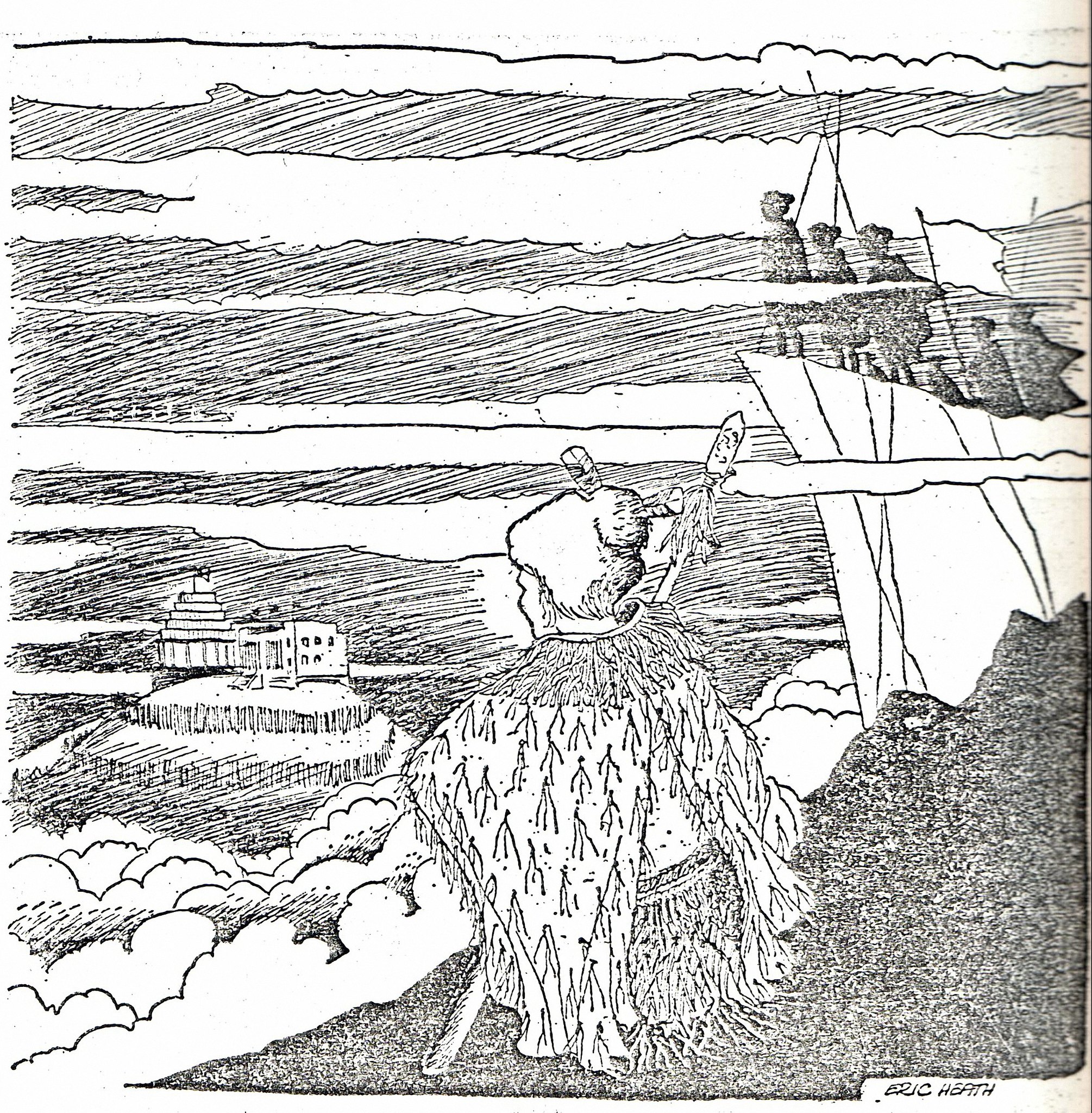
A Sunday of karakia, speeches and rangatira signing the Memorial of Right, before the final stretch of the Māori Land March tomorrow ... where it will make its way down the Wellington motorway, through the centre of our Capital City, and onto Parliament Grounds.
- - - - - - - - - - - - - - - - - - - - -
Cartoon by Eric Heath, The Dominion, 11th October 1975
Day 30 — 13th October 1975
to Parliament Grounds, Wellington
- - - - - - - - - - - - - - - - - - - - -
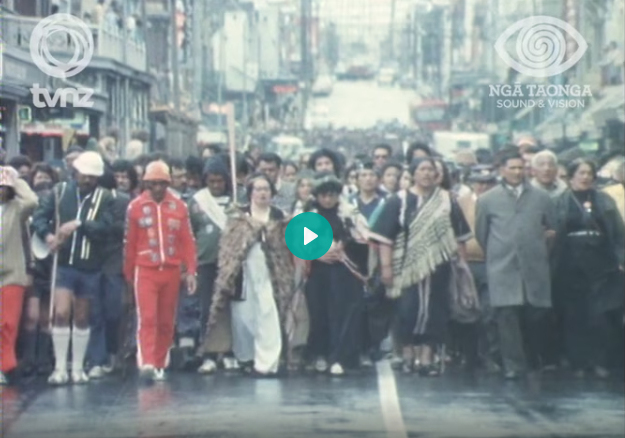
Ngā Taonga Sound and Vision
News Archive TZP26319
TVNZ News item
The final day of the Māori Land March
- - - - - - - - - - - - - - - - - - - - -
The “Memorial of Right” enshrined the demands of the Matakite movement and was formally signed by rangatira along the route of the Māori Land March.
In creating the Memorial, Whina Cooper was symbolically weaving this 1975 demonstration into previous examples of Māori appeals for their land rights. King Tawhiao in 1886, and King Te Rata in 1914, had both taken petitions to the British Crown in London. These expeditions had involved the preparation of a Memorial or Statement of Māori Rights.
Whina's Memorial was addressed to all the Members of the House of Representatives – not just the Government – and these MPs were all personally named up front.
The long scroll was ceremonially unrolled each night on the march, before inviting local rangatira to add their signatures. A great many of these elders who signed were the direct descendants of ancestors who had signed the Treaty of Waitangi.
The Memorial was housed in a leather-bound box, and wrapped in a protective cloak. As the document gathered more signatures on its journey down the North Island, it grew in stature or mana and came to be considered a sacred artefact of the Matakite protest.
When the marchers got to Parliament Grounds, the Memorial of Right was formally handed over to the Prime Minister, Bill Rowling.
- - - - - - - - - - - - - - - - - - - - -
Joseph Cooper reading the Memorial of Rights
- - - - - - - - - - - - - - - - - - - - -
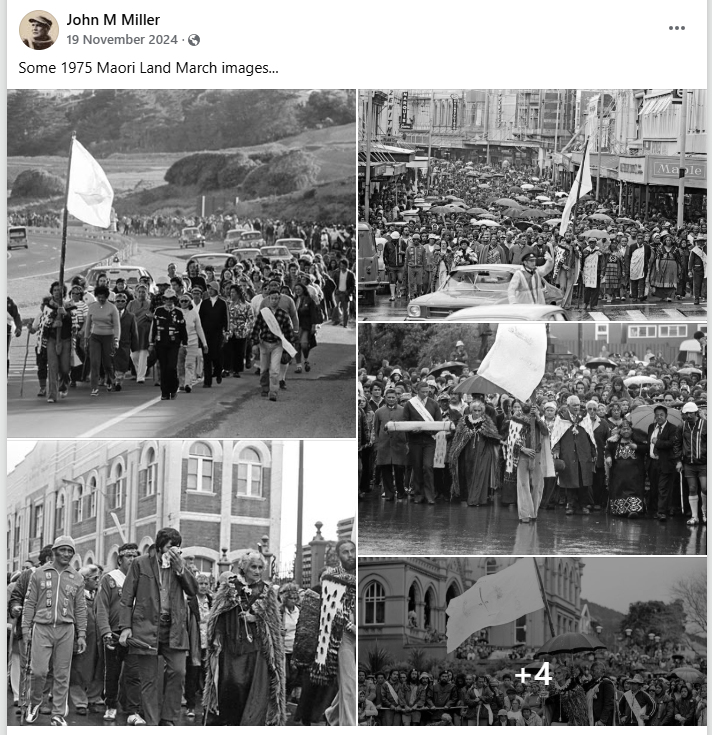
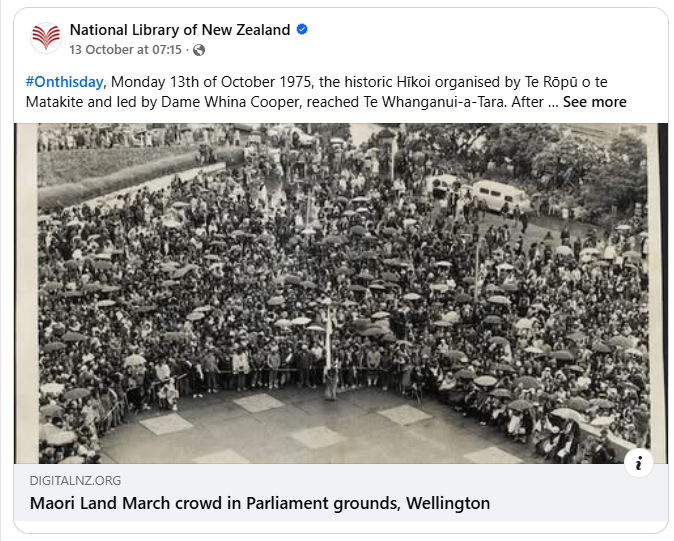
The iconic photographs of John Miller on the last day of the 1975 Māori Land March
Fifty Years On: Whina Cooper’s Land March Legacy Still Inspires Māori Empowerment
Waatea News 13 October 2025
John Tamihere: “These are giants on whom shoulders we stand.”
- - - - - - - - - - - - - - - - - - - - -
The legislative theft of customary kaitiakitanga rights continues in our time, and on all of our watch.
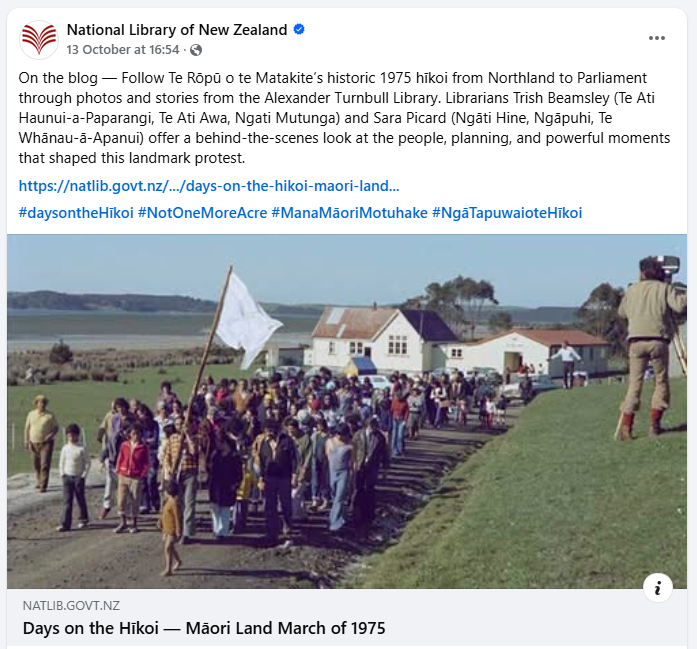
Today our nation marks 50 years since the 1975 Māori Land March arrived at Parliament Grounds.
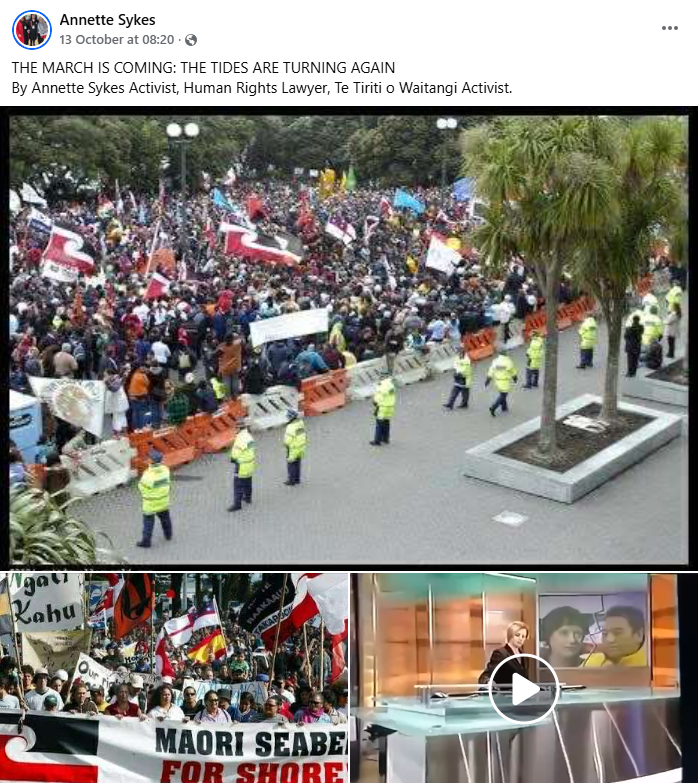
Yet, in this same week, it seems likely that the Marine and Coastal Area (Takutai Moana) (Customary Marine Title) Amendment Bill will pass its third reading and become law. This legislative theft of customary kaitiakitanga rights continues in our time, and on all of our watch. And yet another hīkoi will be a likely response to this injustice against tangata whenua.
Activist and Human Rights Lawyer Annette Sykes: "We will march because we must. Because when the Crown breaches Te Tiriti so fundamentally, resistance is not optional. Because our tūpuna would expect no less. Because our mokopuna deserve better."
The Hui with Julian Wilcox
Episode 34: 13th October 2025
A special feature on the month-long Māori Land March, followed by an interview with marchers Rose Lazarus Spicer and Deirdre Nehua. Later in the programme, Manaia Tuwhare-Hoani, grand-daughter of poet Hone Tuwhare, recites a poem Hone wrote during the march, honouring Dame Whina Cooper.
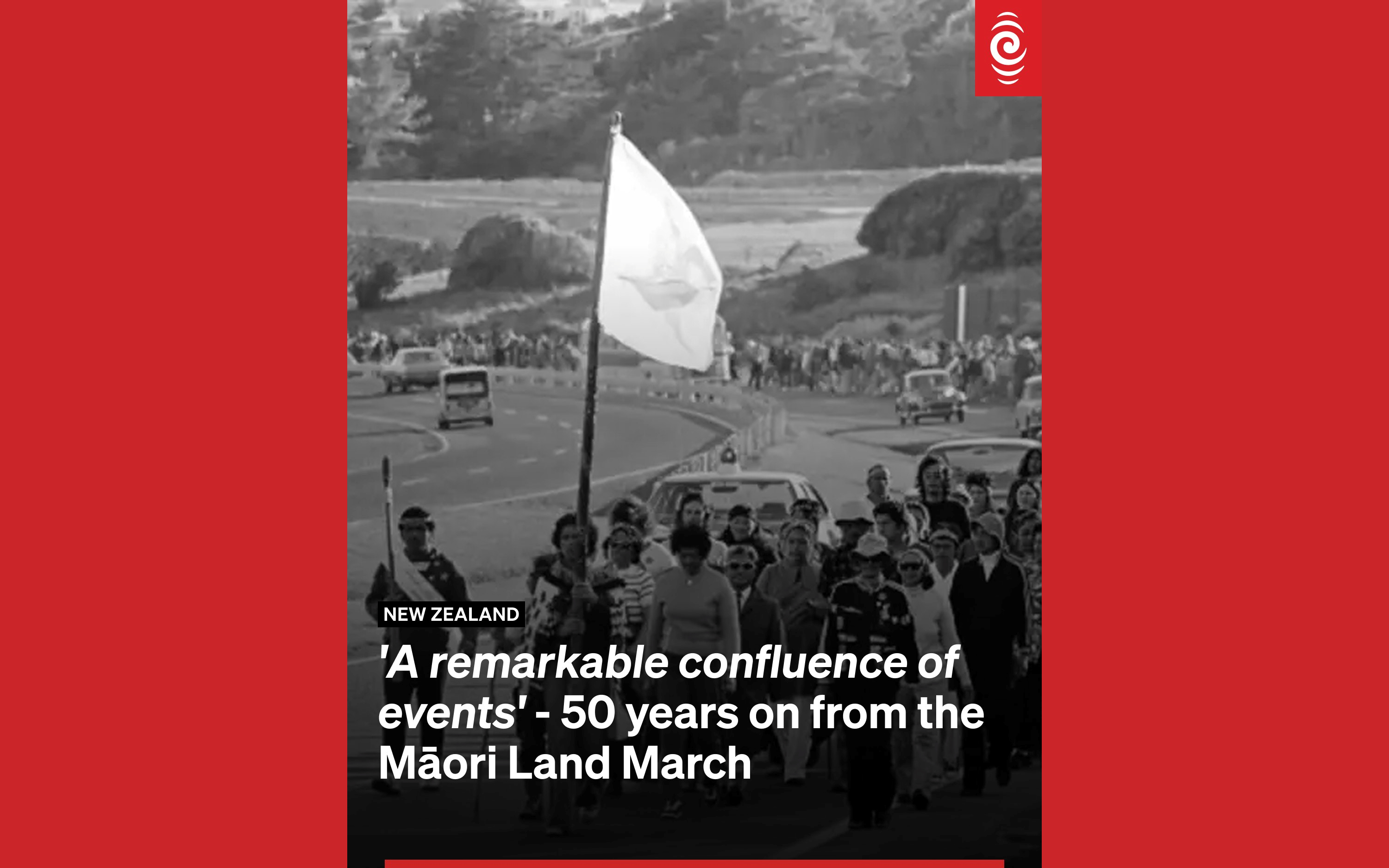
'A remarkable confluence of events' - 50 years on from the Māori Land March
RNZ News Te Ao Māori 29 October 2025
Nine to Noon with Kathryn Ryan interviews Historian Jock Phillips.
Historian Jock Phillips witnessed the arrival of the march at Parliament on 13 October. He told Nine to Noon the march's arrival in Wellington took place during a "remarkable confluence of events" - only three days earlier the Bill establishing the Waitangi Tribunal was signed into law.
Final showdown in Parliament as Government pushes through Marine and Coastal Area law changes
by Māni Dunlop, Te Ao Maori News 21st October 2025
Green Party MP Steve Abel argued that the reforms were built on a false premise, saying the Government’s claim that it was restoring Parliament’s original intent “simply isn’t true.”
Abel: “It shifts the burden of proof back onto Māori to prove the most ludicrous and obvious thing, that they have customary connection to their own coastline. There’s no decent future for this country if we keep passing laws like this. It’s mean-spirited, it’s shitty, it’s petty, and one day another government will have to apologise for it.”
- - - - - - - - - - - - - - - - - - - -
Te Hunga Roia Māori o Aotearoa, the Māori Law Society, has condemned the Bill, warning the legislation would “extinguish Māori rights in the takutai moana” and impose “extremely high legal tests” that would effectively prevent many iwi and hapū from succeeding in their lawful claims.
“This law is a step backwards for justice in Aotearoa. It erases the progress Māori have long fought for in the recognition of their takutai moana rights and erodes faith in the legal system and the Crown–Māori relationship.”
✽ ✽ ✽